
What can stone analysis tell you after a kidney stone passes?
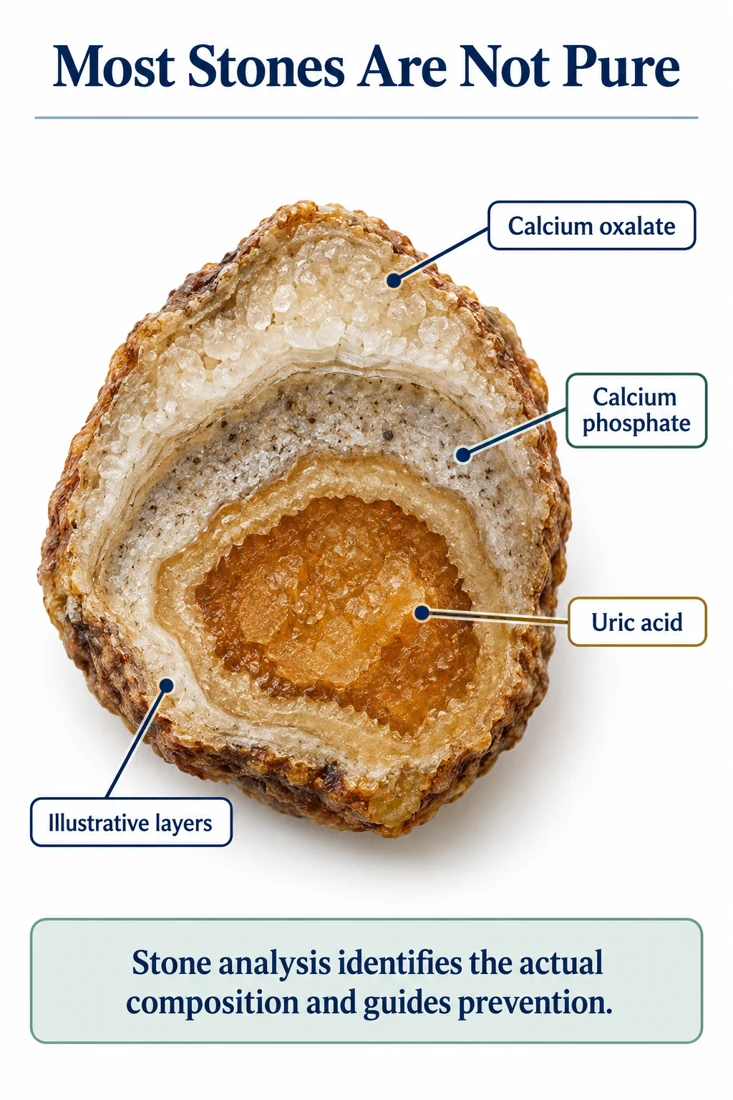
If you catch a kidney stone, the lab can often identify what it is made of. That information can help your clinician choose what to investigate and how to reduce the chance of another stone. Some stones contain more than one material, so bring the complete report if you already have it.
Ask how to collect and deliver the stone
If your care team expects the stone to pass, ask whether to strain your urine and how to store and return anything you catch. Use the container and handling instructions they provide. Note when you caught it and whether the pain changed. A photo can help document what you saw, while the stone itself is what the lab needs for analysis.
Ask what the result changes
An analysis may identify calcium oxalate, uric acid, or another stone type. Your clinician can explain how the result fits with your history, scans, blood tests, and any urine testing. A calcium-containing stone alone gives too little information to justify changing your calcium intake. Ask what, if anything, you should change and whether more testing would help.
Bring the lab report and any scan that shows the original stone's location. Ask whether you still need follow-up to check the urinary tract. Seek urgent care for fever or chills with stone symptoms, or inability to urinate. Explore NY Urology kidney stone care.