
Home · Conditions · Kidney Stones
Stones & urinary
Kidney Stone Treatment in NYC
Explore the illustrated guide ↓
Most kidney stones are very manageable — and many pass on their own. We get you comfortable and the stone handled, then help make sure it doesn't keep coming back.
Fast relief, then prevention
Few things get your attention like a kidney stone. The good news: most are very manageable, and many pass on their own. Our job is two-fold — get you comfortable and the stone handled now, then help make sure it doesn't keep happening.
Symptoms
- Sudden, severe side or back pain
- Pain that comes in waves
- Blood in the urine
- Nausea or vomiting
- Frequent, urgent urination
- Pain radiating to the groin
Seek urgent care if severe pain comes with fever or chills, you can't keep fluids down, or you can't urinate — those can mean infection or a blockage.
Adapted from A Urology Consult in a Book by David Shusterman, MD. Explore the author’s books
The first question: is the stone safe to watch?
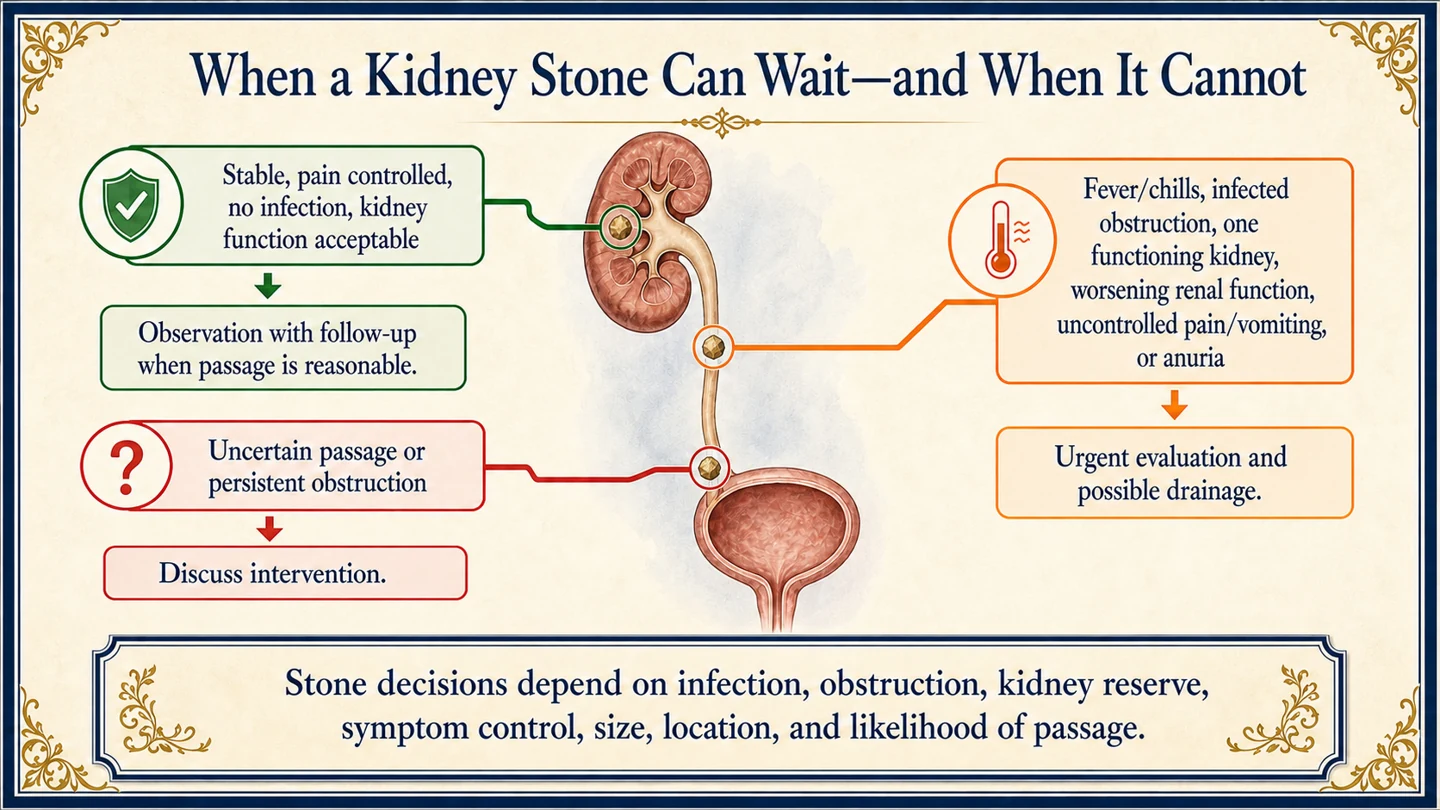
Stone pain can be intense, but pain alone does not tell us whether the kidney is in danger. The evaluation asks where the stone is, whether urine can drain, whether infection is present, how the kidney is functioning, whether pain and nausea can be controlled, and whether follow-up is reliable. A smaller stone may pass without a procedure. Observation still needs an end point: how passage will be confirmed and when imaging or reassessment is due.
Seek urgent medical evaluation for fever or chills with suspected stone symptoms, inability to urinate, uncontrolled pain, repeated vomiting or signs of worsening illness. A stone blocking an infected urinary system is an emergency. The immediate procedure may be a stent or nephrostomy to drain urine; stone removal can follow after the infection and the patient are stabilized.
What will the evaluation measure?
Imaging can show the stone’s size and location and whether the collecting system is enlarged. Urine and blood tests can identify infection, kidney-function concerns and clues to stone type. Ultrasound avoids radiation but may not answer every question; CT may be needed when the diagnosis, location or complications remain uncertain. The choice depends on the presentation. Bring prior scan reports and images if available, a medication list, any stone analysis, and records of previous stone procedures.
If it can pass, what is the follow-up plan?
For a patient who is stable, without infection or threatened kidney function, and whose stone is likely to pass, care may include pain and nausea control, fluids sufficient to avoid dehydration, and selected medication. Drinking excessive water will not force an obstructed stone through. Before leaving an observation visit, know what change requires urgent care, when to return, whether to strain and save the stone, and how passage or relief of obstruction will be confirmed. The disappearance of pain does not always establish that the kidney is draining normally. This decision is more cautious for a person with one functioning kidney, impaired kidney function, pregnancy or an unreliable route to follow-up.
If treatment is needed, how are options compared?
Shockwave lithotripsy (ESWL) breaks selected stones without passing an instrument through the urinary tract. Read about our ESWL service. Ureteroscopy and percutaneous stone procedures are other approaches considered in urologic care. Their suitability differs by size, position, density, anatomy, infection, kidney reserve and patient priorities. An infected obstructed system needs drainage first. The consultation should explain which treatment and location are appropriate for your stone, what recovery or stent symptoms to expect, and how success will be confirmed. Your consultation should clarify which treatments are available in our practice and when referral is needed.
How do we reduce the chance of another stone?
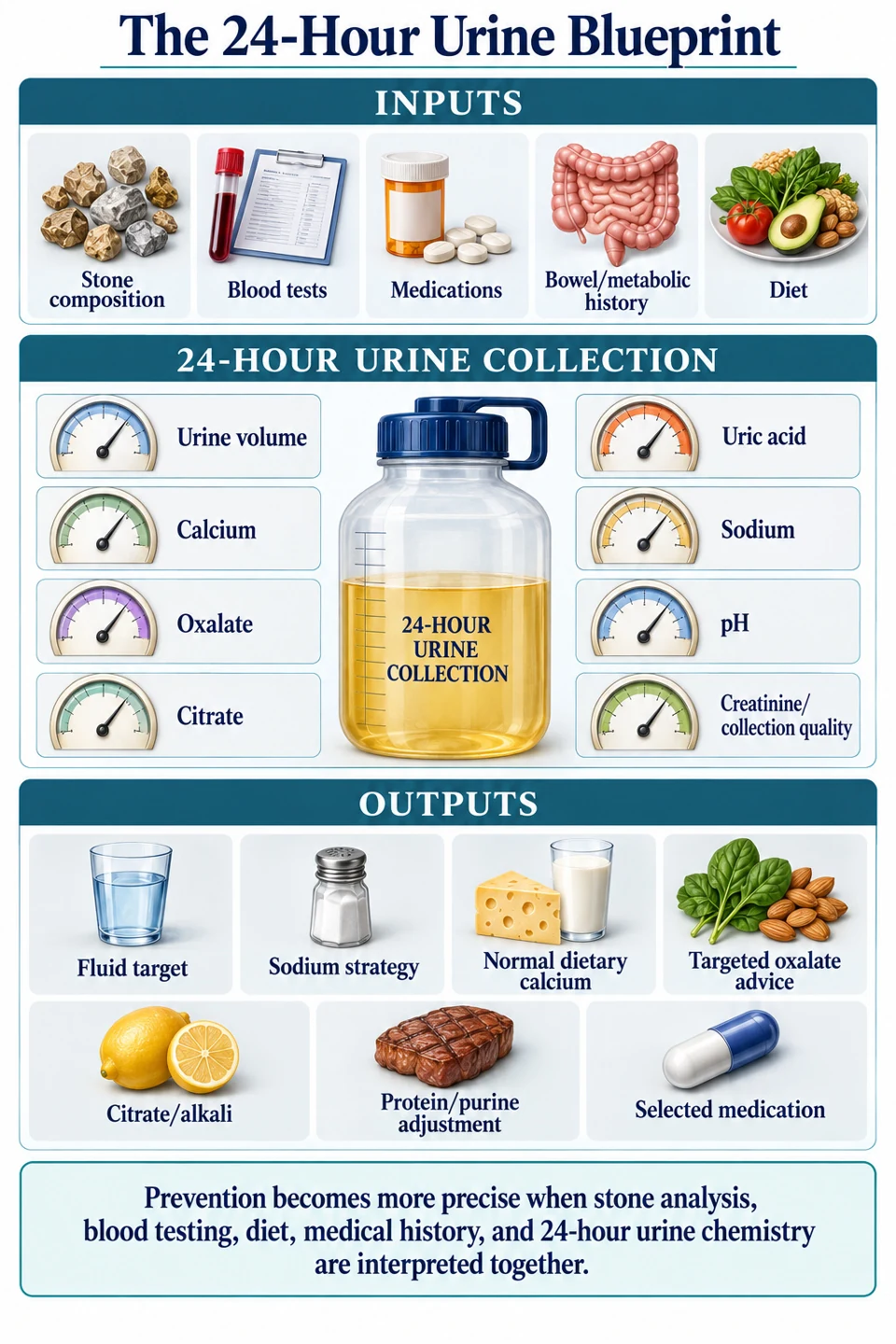
Treat the passed or removed stone as useful evidence: analysis may reveal its composition. For recurrent or higher-risk stone disease, a 24-hour urine collection can help show urine volume and chemistry alongside blood tests, diet, medicines and medical history. A collection should represent ordinary life; an incomplete or unusual day may need repeating. A prevention plan should say which result is being targeted, what diet or medication change is intended, and when the result will be checked again.
Adequate urine volume is a foundation, but there is no single diet for every stone former. Blanket calcium restriction may be counterproductive. Sodium, oxalate, animal-protein intake, citrate and medicines are discussed according to the stone type and the patient’s measurements. Our specialist NYLitho prevention article explains the dietary starting points.
Questions to bring to your visit
- Is infection, blockage or kidney-function risk changing how quickly I need care?
- If observation is reasonable, how will we know the stone passed and the kidney is draining?
- Which treatment fits this stone, and where would it be performed?
- Should my stone be analyzed or would a 24-hour urine collection change my prevention plan?
- What should be measured again, and when?
Bring your scan and prior stone records to a urology visit. We’ll explain the safe next step for this stone and what can be done to lower your future risk.
Stones Unlocked: a deeper plan for your stone
Adapted from Stones Unlocked by David Shusterman, MD.
Size is the beginning of the conversation
A scan measurement is useful, but a five-millimeter stone does not mean the same thing in every patient. A stone low in the ureter, controlled symptoms and reliable follow-up may favor a monitored trial of passage. Persistent blockage, infection, reduced kidney function, repeated emergency visits or difficulty reaching care may change the decision. Ask what the scan shows about location and drainage, not just diameter. Observation should come with a medication plan, return precautions and a date for reassessment. Pain improving does not by itself confirm that the stone passed.
Bring the evidence that changes the plan
Bring the actual imaging when possible, its report, emergency-discharge paperwork, prior operative reports, stone-analysis results and a current medication list. Include supplements and medicines prescribed for another condition. A report saying “kidney stone” may leave out information needed to compare treatments. Tell us about one functioning kidney, pregnancy possibility, kidney disease, bowel surgery, recurrent infections and family history. Blood and urine testing may add information the scan cannot provide. Blood in the urine deserves its own assessment; a history of stones does not prove that every new episode of bleeding has the same cause.
Compare the whole treatment experience
Shockwave lithotripsy breaks selected stones from outside the body; the resulting fragments still need to clear. Ureteroscopy passes a small scope through the urinary tract and may use a laser and extraction tools. Percutaneous treatment uses an access tract into the kidney and can suit larger or more complex burdens. These are different tools, not a universal ranking from best to worst. Ask which fits your stone’s location, density, anatomy and health risks, whether more than one session may be needed, what anesthesia and transportation are required, and whether a temporary stent is likely. Confirm which option our practice provides and when care at another facility is appropriate.
Turn the recovered stone into a prevention plan
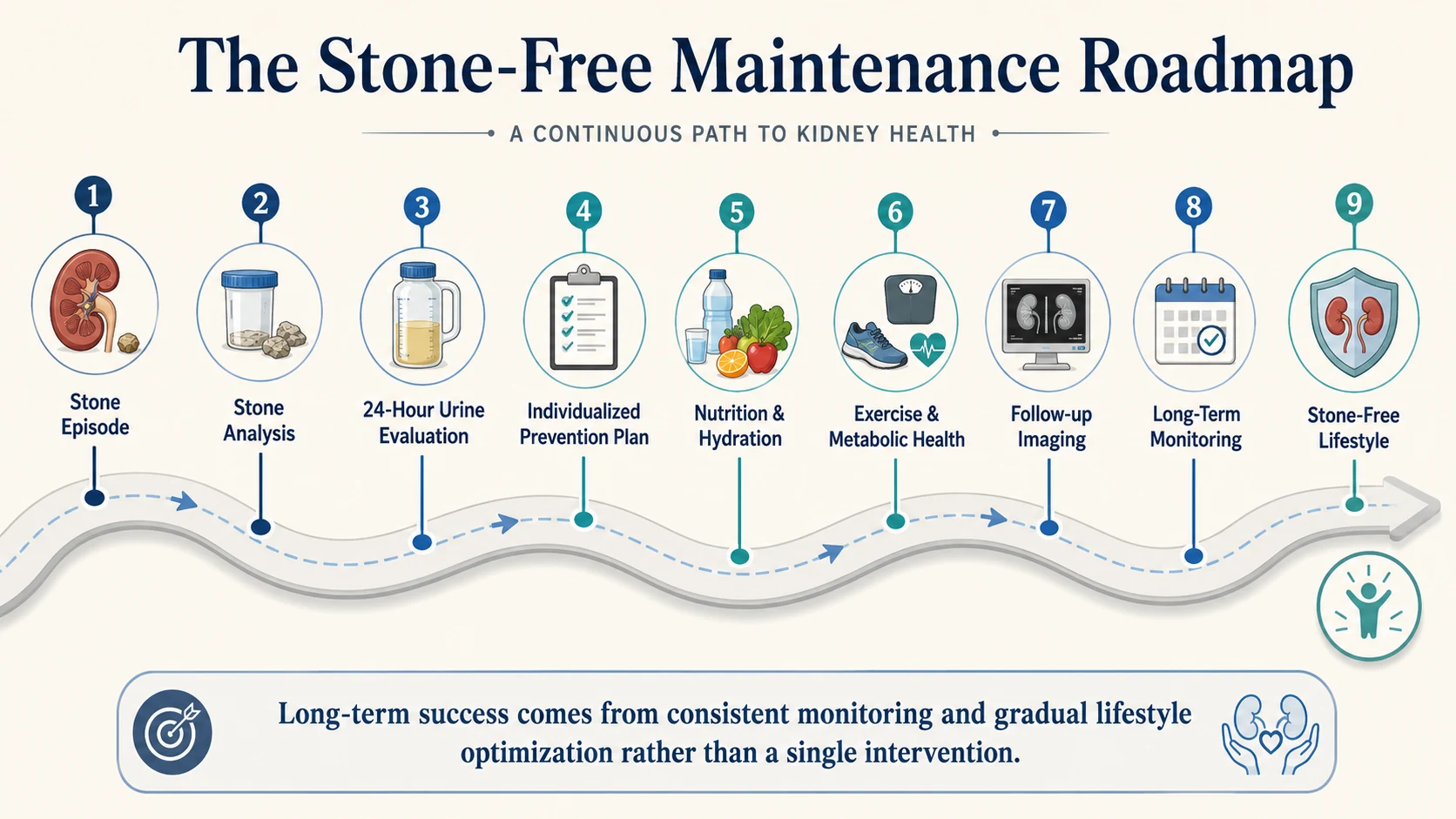
Ask how to save and deliver a recovered stone to the laboratory. Color or shape alone cannot reliably establish composition. Calcium oxalate, calcium phosphate, uric acid, infection-related stones and inherited stone disorders can require different approaches. Recurrent stones or higher-risk features may lead to a metabolic evaluation that combines history, stone analysis, blood tests and timed urine collections. A low urine volume, high sodium excretion, low citrate or an unusual pH is a clue to interpret alongside the whole record, not a diagnosis in isolation. The most useful plan names the target, the change and how the response will be measured.
Make prevention fit ordinary life
Long-term hydration is different from trying to force a stone out during an attack. Build a sustainable routine and individualize it if kidney or heart disease limits fluids. For many calcium-stone formers, normal dietary calcium with meals is preferable to removing calcium indiscriminately. Review sodium per actual portion, selected high-oxalate foods when indicated, and animal-protein intake according to your findings. Do not start potassium citrate, a diuretic or another prevention medicine without a prescribing and laboratory-monitoring plan. After changing diet or treatment, repeat measurements can show whether the intended target improved. Prevention remains follow-up care even when you feel well.
Explore the visual stone guide · Reader companion and printable tools
When to see us
Come in if you're passing a stone, getting them repeatedly, or want a prevention plan. We'll confirm what's going on and get you sorted at our Manhattan or Forest Hills office.
Common questions
What does a kidney stone feel like?
Classic kidney-stone pain is sudden, severe, and comes in waves — usually in the side or back, sometimes radiating to the lower abdomen or groin. It can come with nausea, blood in the urine, or a frequent urge to go.
When is a kidney stone an emergency?
Seek urgent care if severe pain comes with fever or chills, if you can't keep fluids down, or if you're unable to urinate. These can signal infection or a blockage that needs prompt treatment.
Do all kidney stones need a procedure?
No. Many small stones pass on their own with fluids and medication. Larger or stuck stones may need treatment such as shockwave lithotripsy (ESWL) or a minor procedure — we'll size it up with imaging.
How can I prevent kidney stones?
Hydration is the biggest lever, along with diet adjustments based on your stone type. If you get recurrent stones, we can test to find the cause and build a prevention plan.

A Urology Consult in a Book by David Shusterman, MD. A reading companion for preparing your questions, not a replacement for your own evaluation.
UNDERSTAND YOUR CARE
Protect the kidney as well as treating the stone
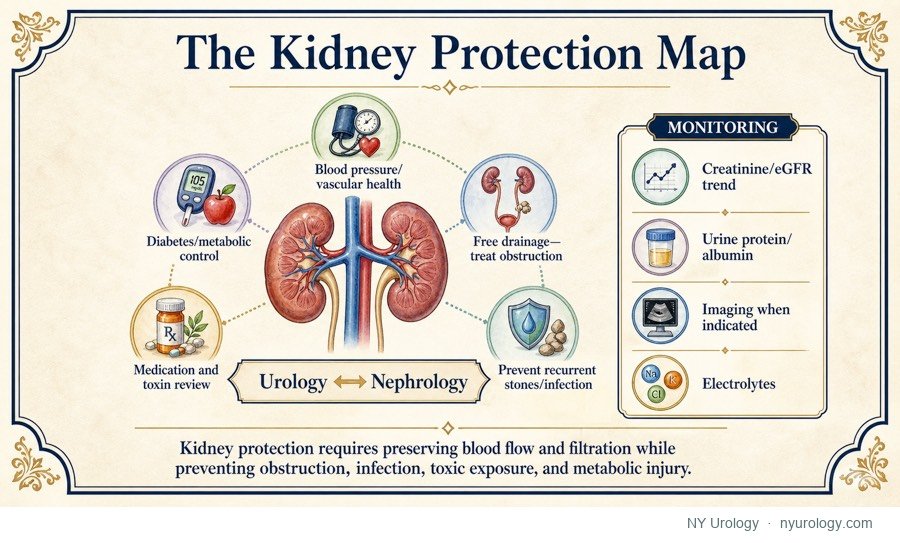
A stone episode raises two related questions: what needs to happen now, and what will protect kidney function and reduce future risk? Pain relief is important, but it does not by itself prove that drainage is normal.
The safety assessment extends beyond stone size
Infection, obstruction, kidney reserve, symptom control, pregnancy and the ability to return for follow-up can change the plan. A small stone can be dangerous in an infected obstructed system; a larger nonobstructing finding may lead to a different discussion. Imaging and selected urine or blood tests put the symptoms in context.
Urgent drainage with a stent or nephrostomy and definitive stone removal are different tasks. When infection makes the situation unstable, protecting drainage and treating infection may come first. If observation is appropriate, the plan should say how passage or relief of obstruction will be confirmed, not rely only on whether pain disappears.
Use the episode to plan ongoing kidney protection
Bring stone-analysis results, prior scans, kidney-function tests and a list of medications and supplements. The number of working kidneys, earlier procedures, infections, bowel disease and other health conditions may affect prevention and surveillance. Keep actual reports so that changes over time can be compared.
The prevention plan may use stone composition and a properly collected 24-hour urine study to identify a target. That complements the detailed stone-treatment and prevention guidance already on this page. Ask what will be measured again, how medication or diet changes will be monitored, and whether other clinicians need to help manage kidney or metabolic risks. The goal is a repeatable plan that fits work, heat, exercise and travel, rather than a one-time instruction to drink more water or avoid a long list of foods.
Questions to bring to your visit
- Is my kidney draining safely, and how will we confirm it?
- Does my kidney reserve change the threshold for treatment?
- Which results should we remeasure to assess prevention and kidney protection?
When to seek care: Fever with a suspected obstructing stone is an emergency. Seek urgent care for inability to urinate, uncontrolled pain, persistent vomiting or worsening illness, especially with one functioning kidney.
Explanation adapted from A Urology Consult in a Book by David Shusterman, MD, chapter 31, “Protecting Kidney Function.” Original illustration reproduced from the book. EAU: stone management.
Prepare for your visit with a book by Dr. David Shusterman
A Urology Consult in a Book explains symptoms, evaluation and treatment choices. Bring your questions to your clinician; the book supports that conversation.
Explore the books and care team →Dealing with a kidney stone?
Book at our Manhattan or Forest Hills office — we'll get you relief and a plan to prevent the next one.

Manhattan & Queens · All Five Boroughs