
Home · Conditions · Men's Health
Men's health
Men's Health
Explore the illustrated guide ↓
From low testosterone and ED to prostate and fertility care, our urologists handle the men's-health essentials in one place — with preventive options for the long run.
See it illustrated
Explore selected illustrations, then open a guide to see the full image and related reading.

The Diagnostic Journey
Open illustrated guide →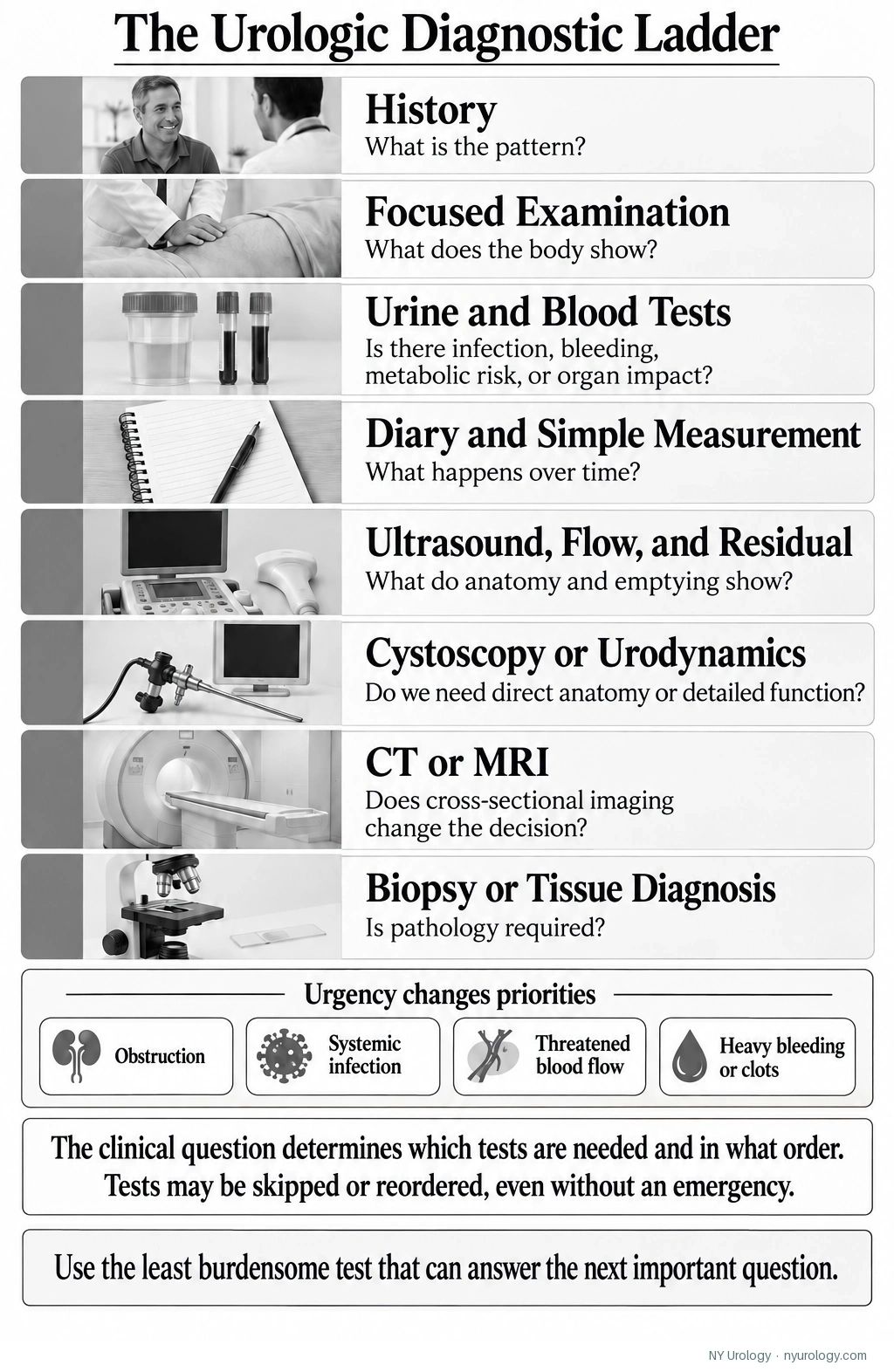
The Urologic Diagnostic Ladder
Open illustrated guide →One place for men's health
Men's health covers a lot of ground — and a lot of it runs through urology. Whether it's low energy that turns out to be low testosterone, an enlarged prostate quietly disrupting sleep, ED, or a fertility question, our urologists handle it under one roof, with the same straight, practical care across both offices.
What we cover
Low testosterone & hormones
Fatigue, low libido, and mood or focus changes can trace back to hormones. See low testosterone treatment.
Erectile dysfunction
Common, treatable, and often a window into overall health — start with our ED evaluation.
Prostate health
From symptoms to screening, our enlarged prostate (BPH) care covers the full treatment ladder.
Fertility & varicocele
Enlarged scrotal veins can affect comfort and fertility — see varicocele embolization.
The long game
Preventive men's health & optimization.
For patients focused on long-term health rather than a single issue, our longevity practice applies a urology-led approach to men's health optimization — hormones, metabolic health, and early detection, built on a comprehensive baseline evaluation. It's preventive longevity care for the long run.
Visit UroLongevityWhen to come in
If something's changed — energy, urination, sexual function, or you just want a baseline — book a visit. Most men's-health concerns are far easier to address early.
Common questions
What does a men's health urologist treat?
A wide range — low testosterone, erectile dysfunction, prostate conditions, urinary symptoms, fertility concerns like varicocele, and general men's wellness. It's one place to sort out the urologic side of men's health.
When should a man see a urologist?
If you notice urinary changes, low energy or libido, ED, prostate symptoms, or fertility concerns — or simply want a baseline as you age. Earlier is easier, and many issues are very treatable when caught early.
Do you offer preventive men's health care?
Yes — and for men focused on the long game, our network's longevity practice goes further into hormone optimization and prevention. We'll point you there when it fits.
UNDERSTAND YOUR CARE
Connect urinary, sexual and whole-body health
A urology visit can connect concerns that are often discussed separately: urinary function, erections, hormones, sleep, kidney health, medicines and the ability to stay active and independent.
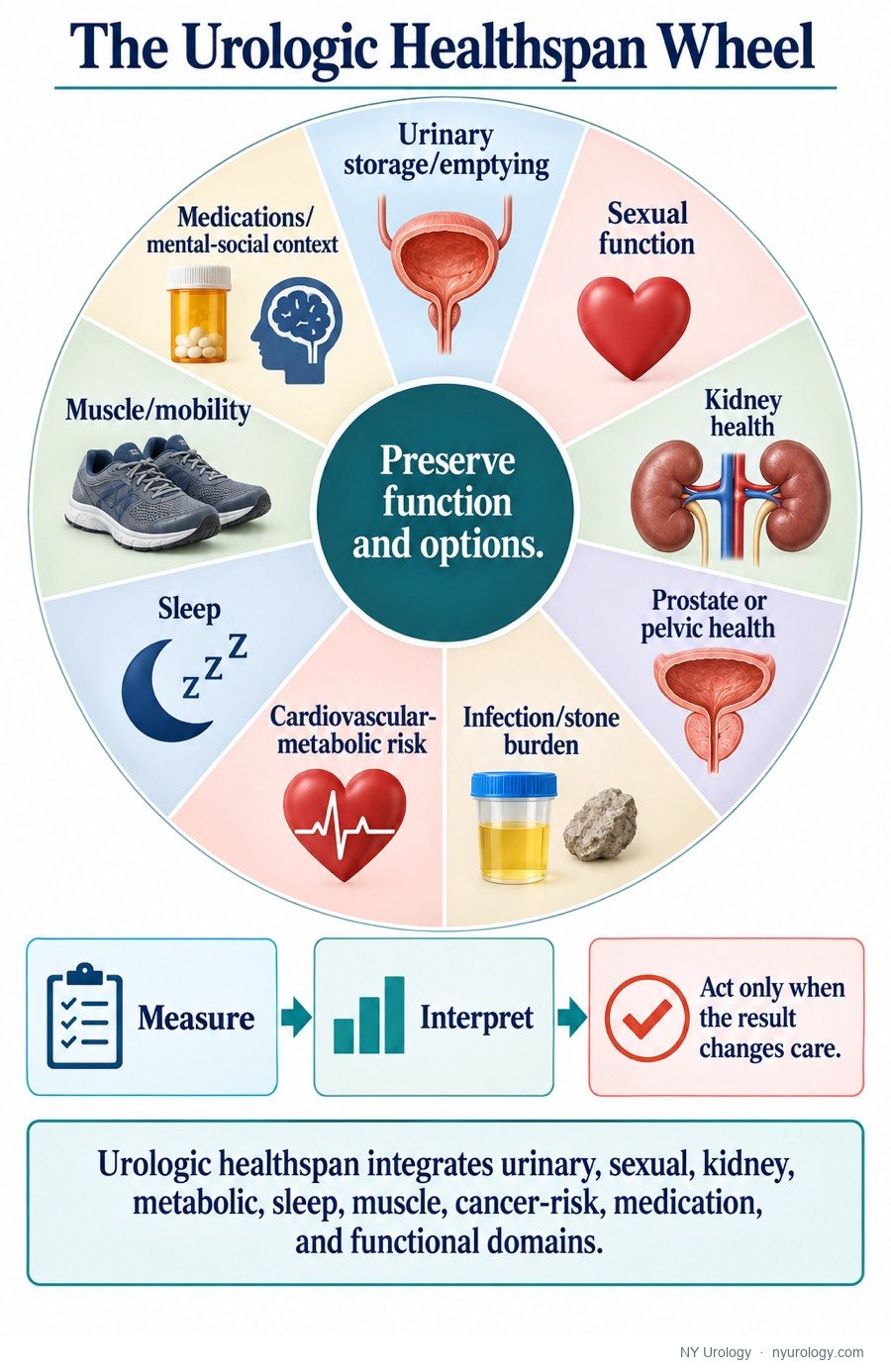
Start with the changes that matter in daily life
Bring the symptoms you want to understand, their timeline and the activities they affect. Changes in nighttime urination, sexual function, energy, exercise tolerance or bladder control may overlap with sleep, vascular or metabolic conditions. They should not automatically be dismissed as normal aging.
The evaluation is guided by the history and examination. A bladder diary, medication review, selected laboratory testing or imaging may answer a specific question. More tests are not always better. Before a test, ask what possible result would change care and whether follow-up or a different clinical assessment is more useful.
Protect function without chasing every number
A practical plan can include urinary care, cardiovascular risk review, sleep evaluation, appropriate movement, bowel management and selective treatment of a defined problem. Hormone treatment, supplements or procedures should have a clear indication, expected benefit and monitoring plan.
Choose outcomes you can recognize: sleeping with fewer interruptions, urinating safely, returning to exercise, more comfortable intimacy or understanding a screening decision. Personal goals, medical risk and treatment burden belong in the same conversation. Record the next action, the reason for it and the review date. If several clinicians are involved, bring the actual reports and medication list so that recommendations can be reconciled. Urologic care works best when it fits the whole person rather than treating each symptom or laboratory value as an unrelated event.
Questions to bring to your visit
- Which of my symptoms may share a cause?
- Which test will change our next decision?
- What is the plan to measure benefit and coordinate with my other clinicians?
When to seek care: Acute inability to urinate, severe genital or flank pain with illness, heavy urinary bleeding, new neurologic symptoms or a prolonged painful erection needs urgent assessment.
Explanation adapted from A Urology Consult in a Book by David Shusterman, MD, chapter 43, “The Urologic Healthspan Assessment.” Original illustration reproduced from the book. NIDDK: urologic health topics.

Prepare for your visit with a book by Dr. David Shusterman
A Urology Consult in a Book explains symptoms, evaluation and treatment choices. Bring your questions to your clinician; the book supports that conversation.
Explore the books and care team →Take care of the basics.
Book a men's-health visit at our Manhattan or Forest Hills office — a simple step that's easy to keep putting off.

Manhattan & Queens · All Five Boroughs