
Home · Conditions · Low Testosterone Treatment
Men's health
Low Testosterone Treatment
Explore the illustrated guide ↓
Low energy, libido, or focus can trace back to low testosterone — and it's often treatable. We confirm it with proper testing, then treat and monitor it carefully.
See it illustrated
Explore selected illustrations, then open a guide to see the full image and related reading.
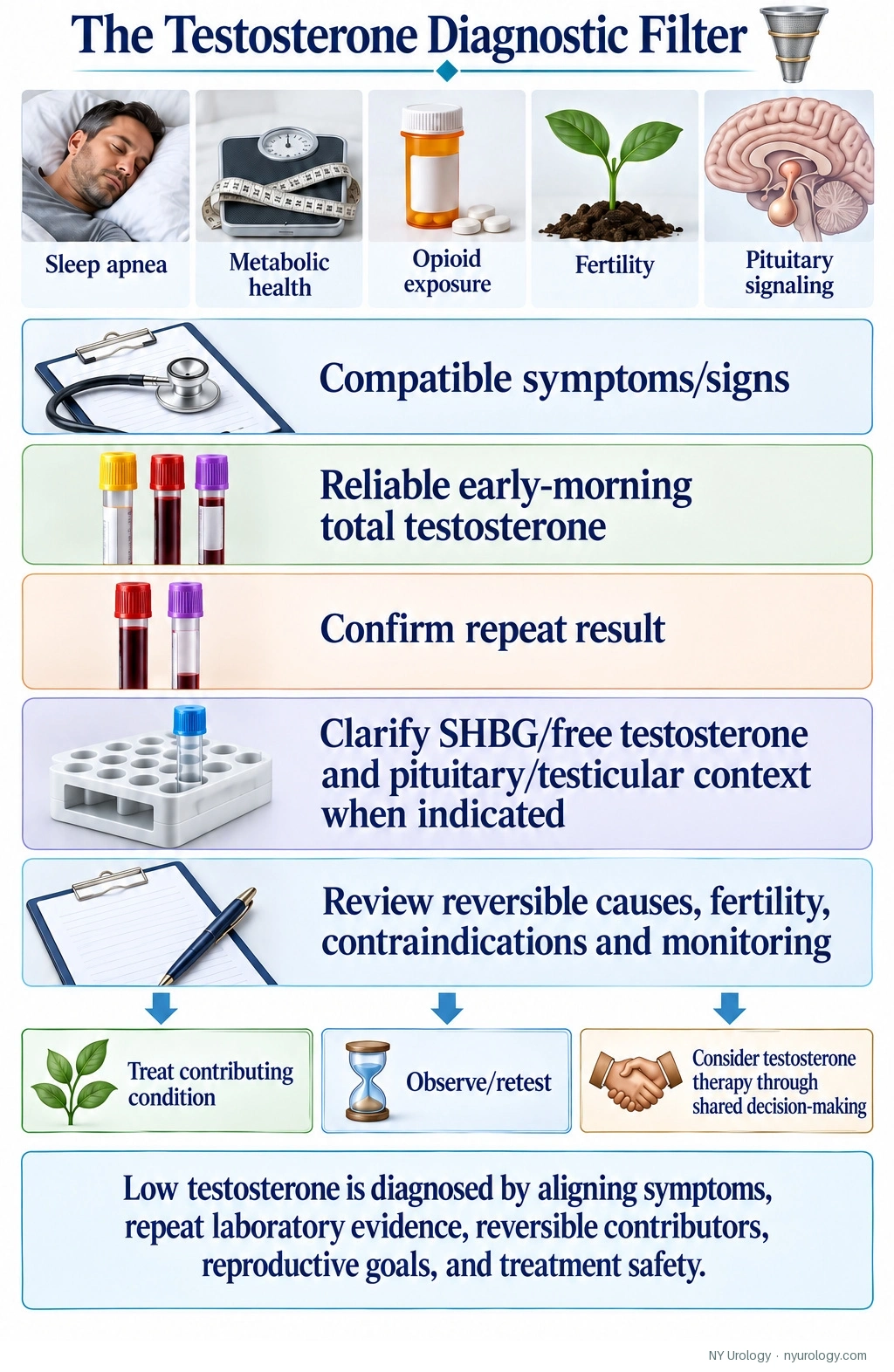
The Testosterone Diagnostic Filter
Open illustrated guide →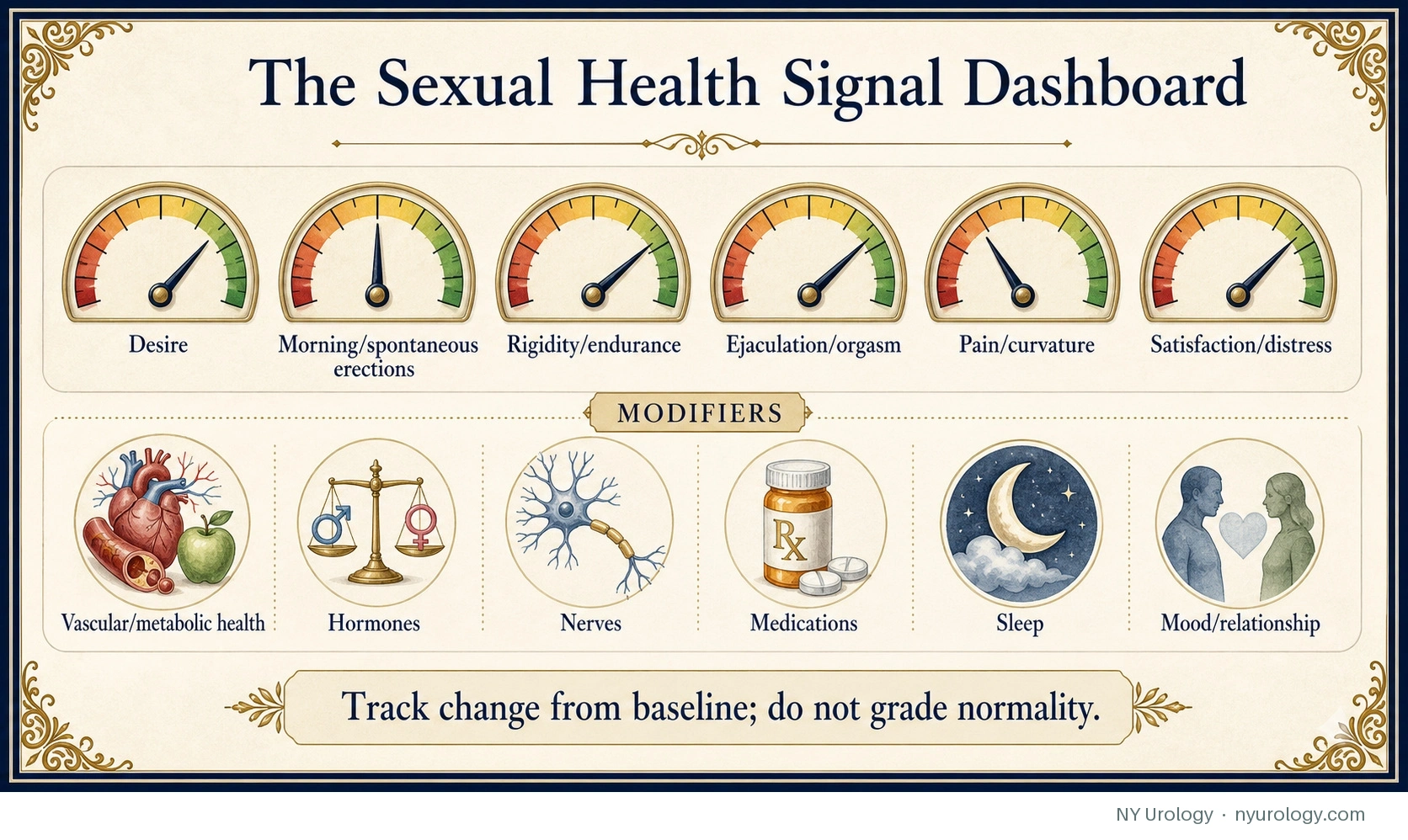
The Sexual Health Signal Dashboard
Open illustrated guide →Low testosterone, sorted properly
Low testosterone (low-T) can quietly drain energy, libido, focus, and motivation — and it's easy to chalk up to "just getting older." Often it's treatable. The key is confirming it with the right testing and treating it carefully, not guessing from symptoms alone.
Signs worth checking
- Low energy or fatigue
- Reduced sex drive
- Trouble building muscle
- Weight gain
- Low mood or motivation
- Difficulty concentrating
How we approach it
Test first
A blood test (typically in the morning) confirms whether testosterone is genuinely low, read alongside your symptoms.
Treat and monitor
If treatment makes sense, we tailor it and follow up with regular monitoring — and we factor in fertility plans, since some options can affect them.
Low-T also overlaps with erectile dysfunction and broader men's health, so we look at the whole picture.
Going deeper
Hormone optimization & the bigger picture.
Men looking beyond a single fix can explore testosterone and hormone optimization at UroLongevity, our longevity-medicine practice — preventive men's health built on a comprehensive baseline.
Hormone optimization at UroLongevityCommon questions
What are the symptoms of low testosterone?
Common signs include low energy, reduced libido, difficulty building muscle, weight gain, low mood, and trouble concentrating. A simple blood test confirms whether testosterone is actually low.
How is low testosterone diagnosed?
With a blood test (usually drawn in the morning), interpreted alongside your symptoms. We confirm the picture before recommending treatment — symptoms alone aren't enough.
Is testosterone therapy safe?
For appropriately selected men, testosterone therapy is generally safe when properly monitored. It isn't right for everyone, so we evaluate candidacy and follow up with regular monitoring.
Will treatment affect fertility?
Some testosterone treatments can affect fertility, so this matters if you're planning to have children. We'll factor it into the plan and discuss options that protect fertility where needed.
Related care
You might also look at
UNDERSTAND YOUR CARE
Confirm the diagnosis before treating a testosterone number
Low energy, low desire and reduced performance have many possible explanations. Testosterone treatment begins with symptoms, reliable repeat testing and a discussion of fertility, contributing conditions and monitoring.

Symptoms and laboratory evidence should agree
A diagnosis is not established by one low result obtained at an arbitrary time. The assessment generally uses early-morning testosterone measurements, repeated as appropriate, and considers illness, sleep, medicines and the laboratory context. Selected additional tests can clarify whether the pattern arises from the testes, pituitary signaling or altered hormone binding.
Sleep apnea, obesity, metabolic illness, opioid exposure and other factors may contribute to symptoms or a low result. The examination and history help decide which of these needs attention. Treating a contributing condition may be part of the plan whether or not testosterone therapy is appropriate.
Fertility and safety are part of the first conversation
External testosterone can suppress sperm production. Anyone who wants children now or may want them later should discuss that goal before starting treatment, rather than waiting until conception becomes difficult. Fertility-preserving approaches require an individualized reproductive evaluation.
When treatment is appropriate, the choice involves the delivery method, convenience, precautions, adverse effects and monitoring. The clinician reviews relevant blood counts, prostate context and other contraindications or cautions according to your health history. A follow-up plan should say which symptoms are expected to improve, how hormone levels and safety findings will be checked, and when lack of benefit will prompt reconsideration. The purpose is to treat a supported clinical problem, not to chase a target number without evidence of benefit.
Questions to bring to your visit
- Do my symptoms and repeat testosterone results support the same diagnosis?
- Which reversible contributors should we address?
- How could treatment affect fertility, and what monitoring will I need?
When to seek care: Do not start testosterone or an online hormone regimen without a medical assessment. New severe symptoms such as chest pain, shortness of breath or a neurologic deficit require emergency care.
Explanation adapted from A Urology Consult in a Book by David Shusterman, MD, chapter 25, “Low Libido And Low Testosterone.” Original illustration reproduced from the book. EAU: sexual and reproductive health guidance.
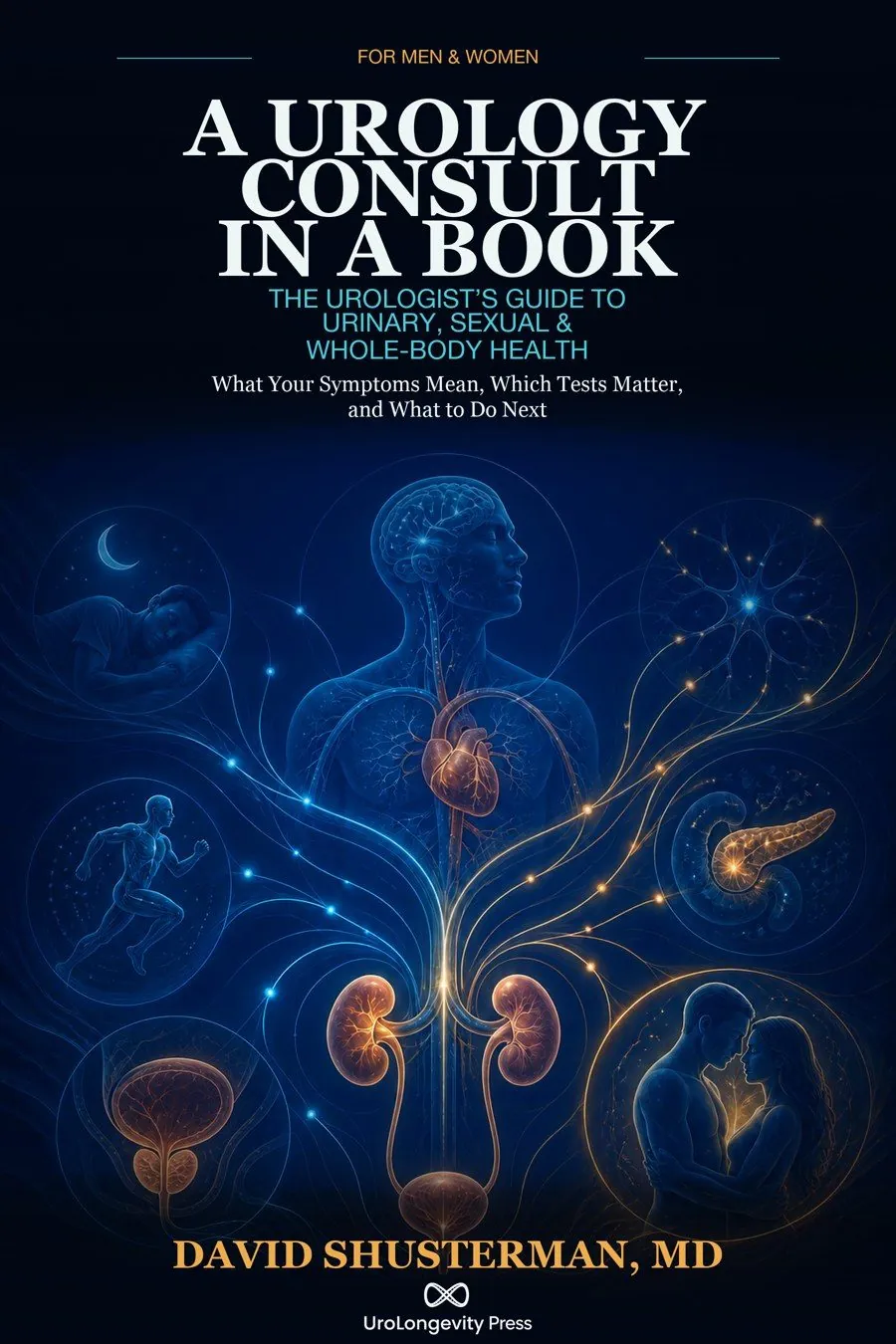
Prepare for your visit with a book by Dr. David Shusterman
A Urology Consult in a Book explains symptoms, evaluation and treatment choices. Bring your questions to your clinician; the book supports that conversation.
Explore the books and care team →Find out if it's low-T.
Book a visit and a simple test — if testosterone is the issue, it's usually very manageable.

Manhattan & Queens · All Five Boroughs