
Office-based bladder care
Urgent PC (PTNS)
A different approach to bladder control.
Explore a non-drug, non-surgical treatment for urinary urgency, frequent bathroom trips and urge leakage.
- No daily medication
- No implanted device
- About 30 minutes per session
See it illustrated
Explore selected illustrations, then open a guide to see the full image and related reading.
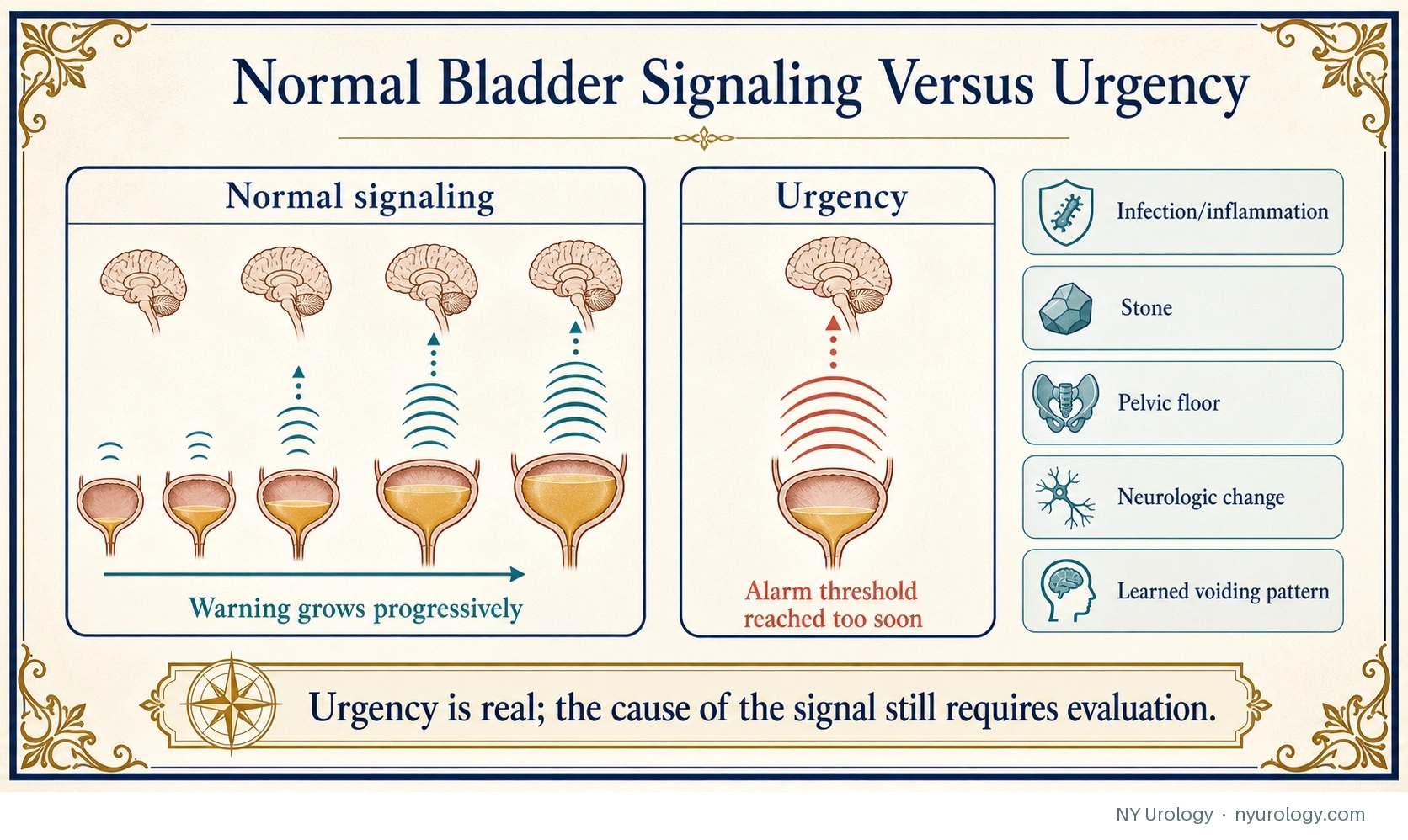
Normal Bladder Signaling Versus Urgency
Open illustrated guide →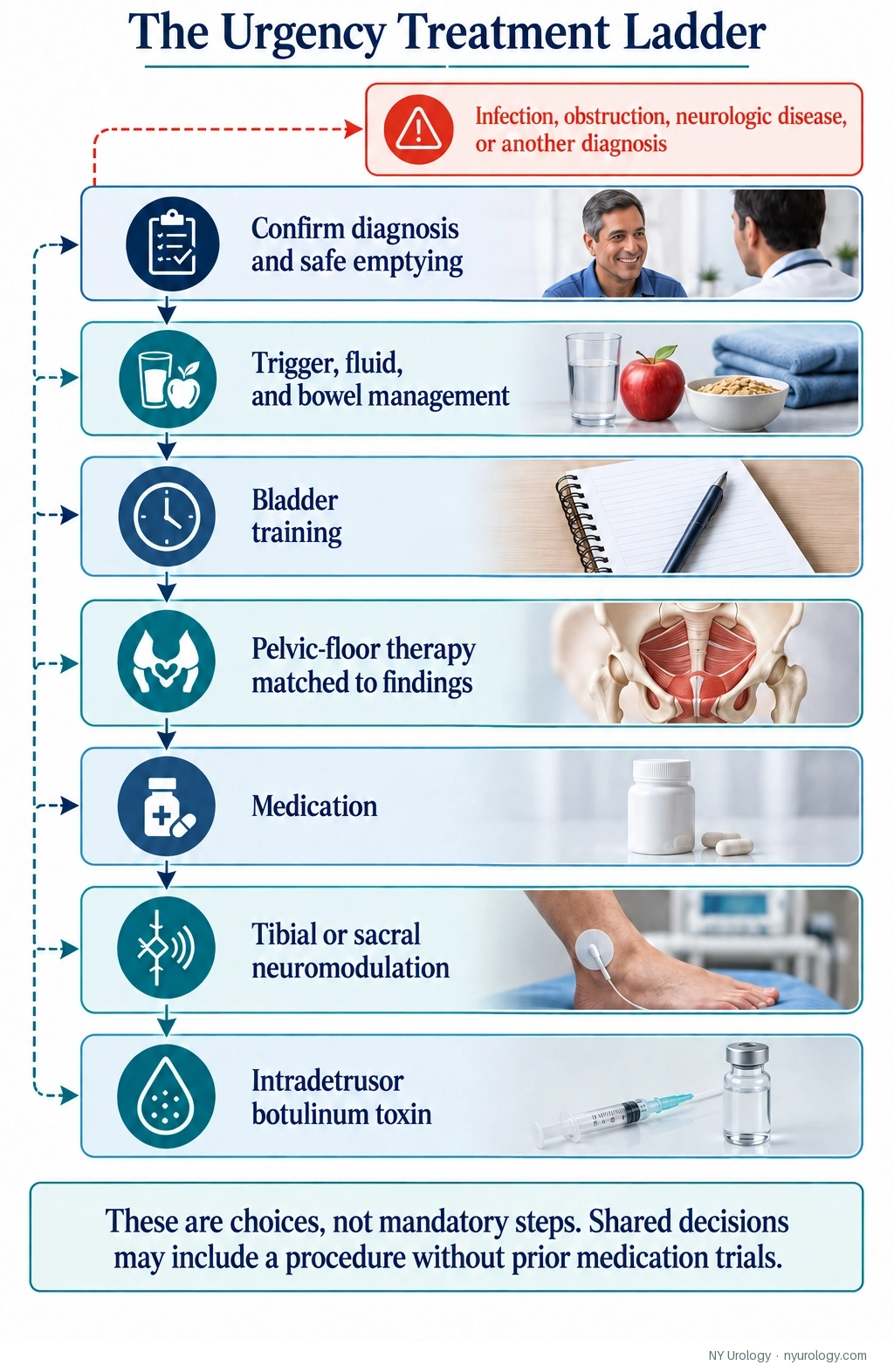
Choosing Treatment for Urinary Urgency
Open illustrated guide →Is your bladder planning your day?
- Sudden urges that are hard to postpone
- Frequent bathroom trips
- Leakage before reaching the toilet
These symptoms deserve an evaluation. Not every bladder problem is overactive bladder.
At NY Urology, start with a clear understanding of your symptoms, bladder emptying and goals. Ask whether Urgent PC belongs in your care plan.
A small needle near the ankle. A different approach to bladder signals.
Urgent PC delivers percutaneous tibial nerve stimulation, or PTNS. A fine needle electrode near the ankle provides mild electrical stimulation to a nerve involved in bladder control. Nothing is implanted.
Urgent PC · Laborie
See what happens during a visit
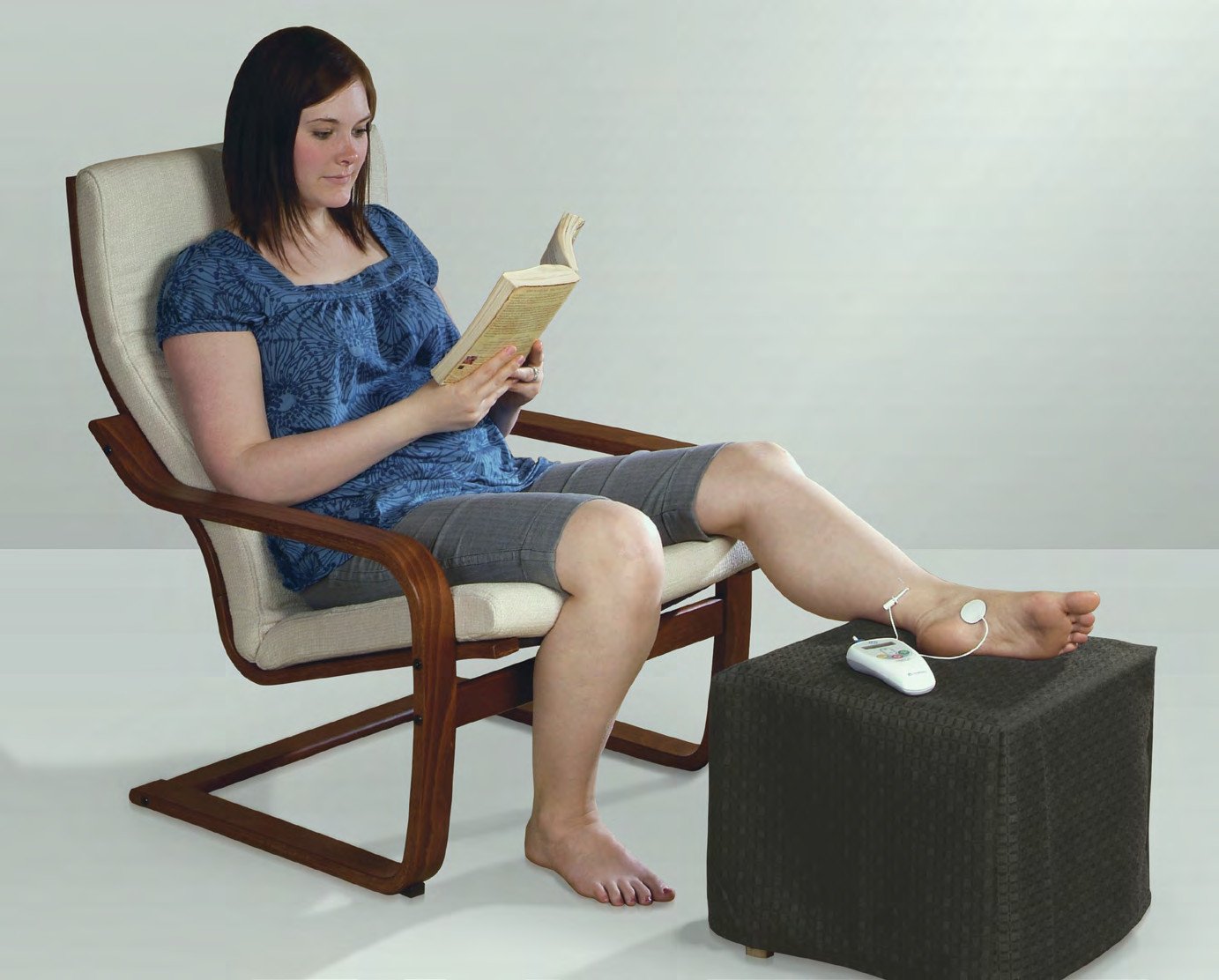
These original manufacturer photos show the Urgent PC equipment, ankle electrode and foot pad used during a treatment session. Your clinician performs the procedure and adjusts stimulation to a comfortable level.
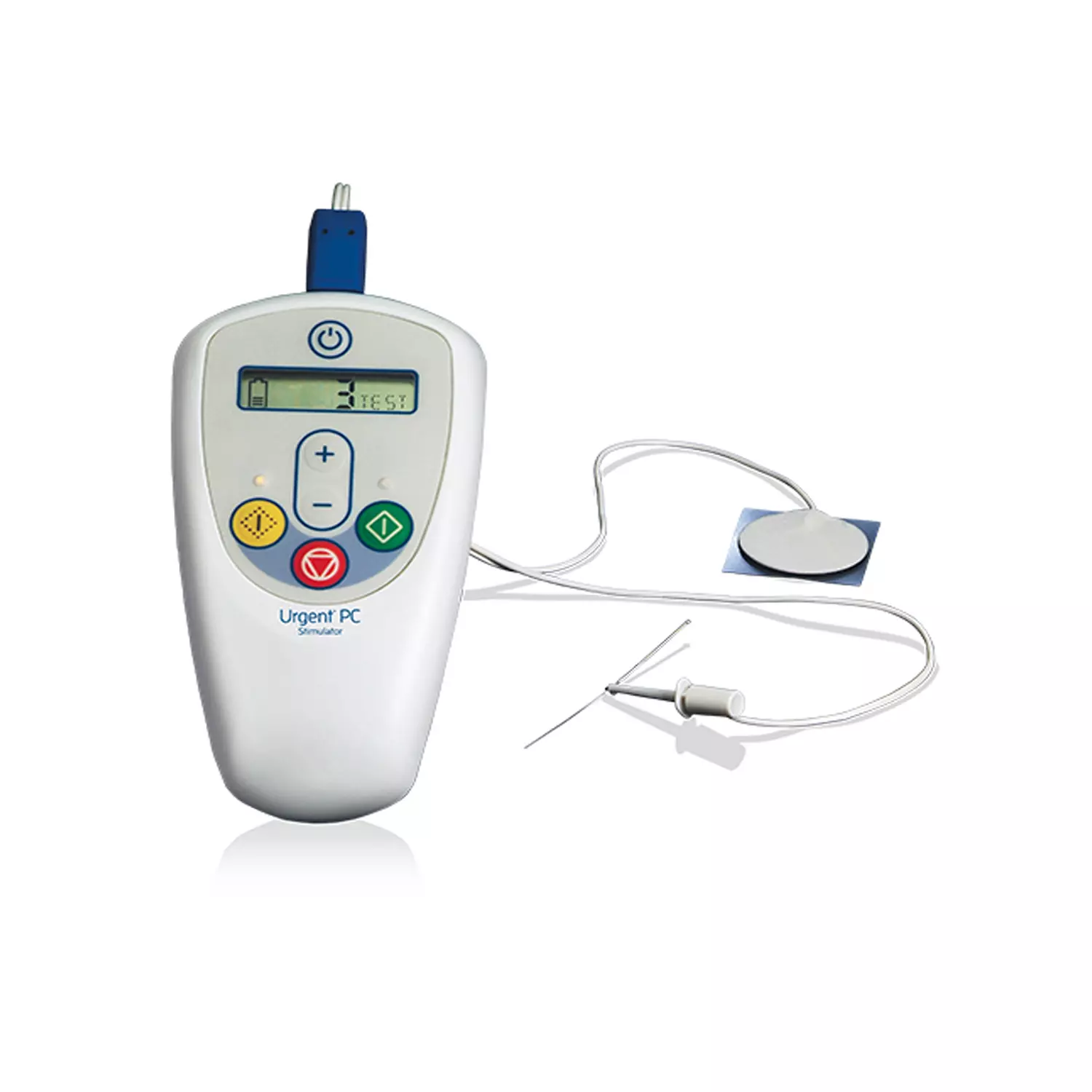
The Urgent PC stimulator
A small external device provides stimulation through the ankle electrode. Nothing is implanted.
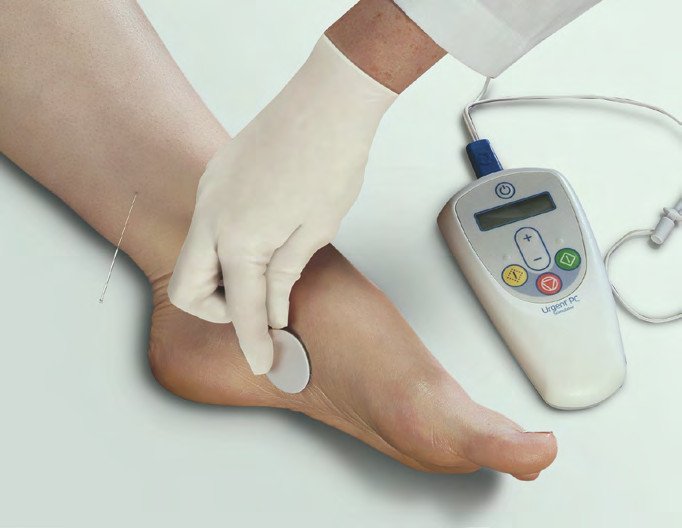
The electrode and foot pad
A fine needle electrode is placed near the ankle, and a surface pad is placed on the foot. The leads connect to the stimulator.
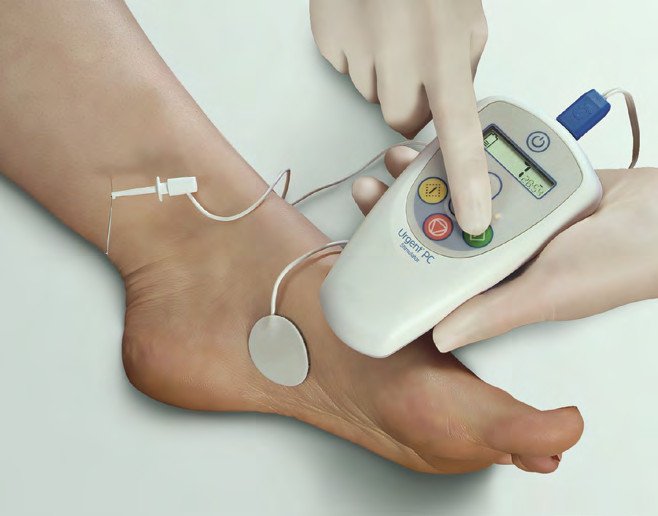
A comfortable treatment setting
Your clinician checks your response and adjusts the stimulation. Let the team know if the sensation is uncomfortable.
Manufacturer demonstration images; these do not show an NY Urology patient or office. Original photos and treatment guide from Laborie. © Laborie.
View the official illustrated guide ↗Understanding the treatment
Urgent PC is a brand of equipment used to deliver percutaneous tibial nerve stimulation, usually shortened to PTNS. The treatment uses a fine needle electrode near the ankle and an external stimulator. It is an office procedure for overactive-bladder symptoms: urgency, frequency and leakage associated with a sudden urge to urinate.
The ankle may seem far away from the bladder, but the tibial nerve connects with nerve pathways involved in bladder function. PTNS uses that access point to influence bladder-control signals. The electrode does not go into the bladder, and no device remains inside your body after an Urgent PC session.
PTNS is minimally invasive, because it uses a needle. Describing it as non-surgical does not mean that it is needle-free. It also differs from implanted nerve stimulators and from treatments that use only skin-surface electrodes. Ask which specific treatment is being discussed so that equipment, visit schedule and expectations are clear.
Which bladder symptoms does it address?
Urgency is the strong feeling that you need to pass urine and cannot comfortably postpone it. Frequency means bathroom trips happen often enough to interfere with your day. Urgency incontinence means urine leaks with that compelling urge. You may have overactive bladder without leakage; the symptom pattern and its effect on your life matter.
Leakage when you cough, laugh, lift or exercise may be stress incontinence. Leakage with urgency and leakage with activity can occur together, called mixed incontinence. Urgent PC targets the urgency component; it is not a universal treatment for every type of leakage. An evaluation helps separate the problems and choose appropriate care for each.
Getting up at night to urinate can accompany overactive bladder, but it can also have other causes. Fluid timing, medicines, sleep problems and the amount of urine produced at night may need attention. Do not assume that every nighttime bathroom trip will respond to PTNS. Tell your clinician about daytime symptoms as well as sleep disruption.
Who may consider PTNS?
PTNS may be worth discussing when urgency, frequency or urge leakage remains troublesome, when a medicine has not helped enough, or when medication side effects or personal preferences make another approach attractive. It is an option for both men and women. Suitability depends on the diagnosis, medical history, goals and ability to attend repeat visits.
Treatment decisions should be shared with your clinician. You do not have to choose based only on whether a therapy is described as advanced. Discuss the practical tradeoffs: an ankle needle and regular office visits, medication use, other procedures, possible side effects and what happens if symptoms do not improve. The best plan fits your circumstances.
Evaluation before a treatment course
Start by explaining when symptoms began, what bothers you most and whether you leak with urgency, activity or both. Your clinician may review medicines, previous treatments, fluid intake, bowel habits and medical conditions. A urine test can help investigate infection or blood in the urine. Other testing depends on your symptoms and the findings.
Difficulty starting urine, a weak stream or a feeling that the bladder does not empty should also be discussed. The clinician may check how much urine remains after you void when appropriate. Urgency and an emptying problem can coexist. PTNS should not become a shortcut around investigating symptoms that suggest another cause or need separate treatment.
A bladder diary turns a general concern into information you can discuss. Record typical days rather than trying to make the numbers look better. A useful baseline shows bathroom times, urgency, leaks and drinks. Bring earlier test results or treatment information if you have them; your care team can tell you which records are useful.
Before you arrive
Choose clothing that lets the team reach your lower leg, ankle and foot comfortably. Bring your medicine list, questions and any requested bladder diary. A book or headphones can help pass the seated treatment time. Confirm the visit length, address and treatment team when scheduling; a 30-minute stimulation session does not include all check-in and setup time.
Do not stop a prescription, including a blood thinner, or change fluid intake solely to prepare for PTNS without instructions from your clinician. Tell the team about implants, bleeding problems, nerve conditions, pregnancy, skin concerns near the ankle and changes in your health. Follow the actual instructions given for your visit rather than a general online checklist.
The visit, step by step
- Settle into the chair and review the plan. The clinician explains the procedure, checks relevant health information and answers your questions. You remain awake. The photographs on this page show the manufacturer's demonstration of the setup; they are not photographs of patients treated at NY Urology.
- Prepare the ankle and connect the equipment. The clinician cleans the chosen area and places a fine needle electrode near the ankle. A surface electrode is placed on the foot and leads are connected to the external stimulator. This is performed by the clinical team; the guide is not a set of instructions for self-treatment.
- Check the response and adjust stimulation. You may notice tingling or pulsing in the foot or a toe movement. Tell the clinician what you feel. The setting is adjusted to an appropriate, comfortable level. Stronger sensation is not a goal you should pursue yourself, and discomfort should be reported during the session.
- Complete the session. Stimulation usually lasts 30 minutes. You sit with the treatment leg supported and may read or relax. At the end, the team turns off the device and removes the electrodes. Ask about the next appointment and what to report afterward. No stimulator is implanted or left attached for ongoing home treatment.
The first 12 weeks and beyond
A typical initial PTNS course is 12 weekly treatments, with 30 minutes of stimulation at each visit. This is a repeated treatment program, not a single appointment intended to settle every bladder problem. Before starting, discuss whether the schedule is realistic alongside work, caregiving, travel and your other medical appointments.
Response can develop over several visits. One good day or one difficult day does not tell the whole story. Compare your usual symptom pattern with the baseline and bring changes to the team's attention. If you miss a visit, contact the office to discuss the next step; do not invent a replacement schedule or assume the course has failed.
When the initial course is complete, review both the symptom change and the practical value of that change. If PTNS helps, maintenance sessions may be recommended to sustain the benefit. The interval is individualized. Ongoing visits are part of the treatment burden, so ask how follow-up will be organized before you commit to a course.
What improvement can reasonably mean
Improvement is not the same as a promise of a cure. Useful changes may include less disruptive urgency, fewer leaks, fewer bathroom trips or more confidence leaving home. Decide which changes matter most to you. A diary can show patterns that are difficult to remember at an appointment, especially when several symptoms change at different speeds.
In the randomized SUmiT trial, 220 adults received weekly PTNS or sham treatment for 12 weeks. At the week-13 assessment, 54.5% of the PTNS group reported moderate or marked overall improvement, compared with 20.9% of the sham group. These are study results, not a guaranteed personal outcome or this practice's success rate.
Longer-term studies have followed patients who responded to the initial course and continued maintenance. Those results should not be interpreted as showing that every person starting PTNS will have lasting benefit. Ask how your own response will be reviewed, which symptoms will be measured and when the plan should be changed if the improvement is not worthwhile.
SUmiT trial — Peters et al., 2010Tracking progress without overcomplicating it
Choose a few meaningful measures and record them consistently. The number of bathroom trips, urgency episodes and leaks is often more useful than a general good-day score alone. If you record drinks, include timing and approximate amounts. Bring the diary to follow-up; it is a discussion tool, not a test you must pass.
Write down practical changes too. Can you finish a meeting without leaving, take a walk with less worry, or make fewer clothing changes? These goals help translate symptom counts into daily life. If frequency improves but pain, weak stream or another symptom remains, report that separately rather than treating the whole problem as solved.
| Time or situation | What to record |
|---|---|
| Bathroom visit | Time, urgency and whether urine leaked before you reached the toilet. |
| Drink or nighttime awakening | Drink type and approximate amount; note whether you woke to urinate or were already awake. |
| Daily-life goal | One activity that became easier or remained difficult; discuss the pattern with your clinician. |
After a session and between visits
PTNS is usually an outpatient treatment, and many people return to ordinary activities afterward. Follow the instructions your team gives you, especially if you have other health or mobility concerns. Temporary discomfort, redness or a small amount of bleeding can occur near the needle site. Tell the team about a reaction that concerns you or does not settle.
Continue only the bladder-care habits and medicines agreed with your clinician. PTNS does not automatically replace bladder training, appropriate fluid management or pelvic-floor care. Avoid judging its effect after simultaneously changing several treatments without discussing that plan. Your team needs to know what else changed to interpret the diary and choose the next step.
Comparing your treatment choices
Each option has a different practical commitment. A discussion should include how the treatment is delivered, how often follow-up is needed, possible side effects and what you would do if it does not help enough. A comparison table can organize questions, but it cannot choose treatment for you or replace an individual evaluation.
| Option | Practical questions to discuss |
|---|---|
| Bladder training and pelvic-floor care | Which habits or exercises fit your symptom pattern, and who can teach you to do them correctly? |
| Medicines | What benefit is expected, which side effects matter for you, and when will the medicine be reviewed? |
| Urgent PC / PTNS | Can you attend the initial office course and later maintenance, and is the ankle-electrode approach suitable? |
| Bladder Botox | Discuss bladder injections, follow-up, infection risk and the possibility of difficulty emptying the bladder. |
| Sacral neuromodulation | Discuss a trial or assessment stage, an implanted device when appropriate, procedure risks and device follow-up. |
Questions to bring to the consultation
- Which of my symptoms fit overactive bladder, and which need a separate explanation?
- What would count as useful improvement for me, and how will we measure it?
- What is the initial visit schedule, and how might maintenance be arranged?
- Who will perform treatment, at which office, and what should I bring?
- Are there precautions related to my medicines, implants or health history?
- What will my insurance require, and what costs should be confirmed before treatment?
- What happens if I do not improve enough or cannot keep attending?
Office access, insurance and scheduling
NY Urology has Manhattan and Forest Hills offices. A consultation can help determine your diagnosis and treatment choices, but do not assume that Urgent PC is provided by every team at every location. When booking, ask the office to confirm where treatment is offered, who provides it and how repeat appointments will be scheduled.
We accept most insurance, including Medicaid plans and Medicare. Acceptance is different from a plan's decision to cover a particular treatment. Benefits, referral rules, prior authorization, visit limits and your share of the cost are checked individually. Ask what needs to be confirmed before the first session and whether maintenance has separate requirements.
Use the appointment request for scheduling, not for sending a detailed bladder diary or private medical history through an ordinary message. The team can explain the appropriate way to provide clinical records. Bring sensitive information to the consultation or use an approved clinical channel when instructed. This page does not collect or store your symptom diary.
Useful reading and official resources
Use these resources to prepare questions, understand the equipment and organize your next visit. Manufacturer material explains the device; research reports study results; your clinician applies that information to your situation. The official illustrated treatment guide is intended for trained professionals and is linked for context, not as a self-treatment manual.
Your treatment roadmap
Evaluate your symptoms
Bring your medication list and, if available, a bladder diary. Your clinician checks for infection, emptying problems and other causes.
Begin a course of visits
A usual initial course is one 30-minute session each week for 12 weeks. You remain seated during stimulation.
Review progress and maintenance
Track urgency, trips and leaks. If treatment helps, maintenance visits may be needed; timing depends on your response.
Questions patients ask
Is this surgery?
No surgery or implanted device is involved. A needle is used near the ankle, so PTNS is minimally invasive rather than needle-free.
What might I feel?
Tingling or pulsing around the foot is common. Tell the team if it is uncomfortable; stimulation can be adjusted.
Will one visit fix my symptoms?
PTNS is a course of treatment. Improvement varies, and follow-up is part of the plan.
Does it treat leakage when I cough or exercise?
Urgent PC targets overactive-bladder symptoms and urge leakage. Leakage with coughing or activity may have another cause; your evaluation distinguishes these patterns.
Can men have Urgent PC treatment?
Yes. PTNS is used for overactive-bladder symptoms in men and women. In men, urgency can coexist with prostate or bladder-emptying concerns. An evaluation still needs to identify the relevant problems rather than assuming that the same treatment will address every urinary symptom.
Can I continue my bladder medicine?
Sometimes PTNS is used alongside other care, but your clinician should set that plan. Do not stop, add or change a prescription because you are starting PTNS. Review the medicines you take and tell the team about side effects or changes, so that symptom improvement can be interpreted accurately.
Can I have treatment at home?
Urgent PC sessions described here are delivered in the office by a trained clinical team. Other tibial-nerve technologies use different equipment and protocols. Do not substitute an internet device or follow the professional setup guide yourself. Ask your clinician if another method is appropriate for your situation.
What if the first few sessions do not help?
Improvement can take several visits, and the initial course is evaluated as a whole. Report your symptoms and any discomfort rather than silently abandoning the plan. Your clinician can review attendance, the diagnosis, other treatments and whether to continue, adjust or consider another option.
Is it the same as an implanted bladder pacemaker?
No. Urgent PC uses an external device during a session, and the electrodes are removed afterward. Sacral neuromodulation and implantable tibial-nerve systems involve different approaches. Ask about the exact device and procedure rather than treating all forms of nerve stimulation as interchangeable.
Will insurance cover the whole course?
Coverage is plan-specific. Confirm benefits, authorization and any visit requirements with the office and your insurer before beginning. A recommendation for treatment is not a guarantee of coverage, and maintenance may need a separate check. Ask for an explanation of your expected share of the cost.
Do I need to change my fluids?
Discuss drinks, timing and your overall health with your clinician. Avoid cutting fluid intake to the point of dehydration just to reduce bathroom trips. A diary can help the team see whether changes in caffeine, alcohol or timing are worth considering alongside the treatment plan.
Why can symptoms return after improvement?
Overactive-bladder symptoms can need ongoing management. Maintenance may be part of a successful PTNS plan, and new symptoms or a change in health may require reassessment. Do not assume that every recurrence means the treatment has failed or that simply adding sessions is always the answer.
A brief safety check before treatment
Tell your clinician about a pacemaker or implanted defibrillator, pregnancy or plans to become pregnant, excessive bleeding, or nerve damage affecting the treatment pathway. These can make Urgent PC unsuitable. Possible effects include temporary needle-site pain, skin irritation or minor bleeding.
Start with an evaluation
Bring your questions and your goals. Ask which office and care team can provide your treatment, and what your insurance requires. Benefits and authorization are checked individually.
Request a bladder-control consultationPatient information sources
- Laborie — Urgent PC
- Laborie — Urgent PC Treatment Steps
- Laborie — PTNS patient information
- SUmiT trial — Peters et al., 2010
- STEP study — Peters et al., 2013
- NIDDK — Symptoms and causes
- NIDDK — Diagnosis
- NIDDK — Treatment
- Whittington Health — PTNS patient information
- FDA — Urgent PC clearance
Urgent PC is a registered trademark identified by Laborie. This practice page does not imply manufacturer endorsement.

Prepare for your visit with a book by Dr. David Shusterman
A Urology Consult in a Book explains symptoms, evaluation and treatment choices. Bring your questions to your clinician; the book supports that conversation.
Explore the books and care team →