
Home · Conditions · Prostatitis
Prostatitis
Prostatitis
Explore the illustrated guide ↓
Prostatitis is too often met with a quick antibiotic and no real answer. We evaluate it properly — in-office ultrasound plus blood and urine testing the same visit — so treatment fits the actual cause.
Prostatitis, diagnosed properly — not guessed at
Prostatitis — inflammation or infection of the prostate — causes pelvic or groin pain, burning or frequent urination, and discomfort that too often gets a quick antibiotic without a real work-up. The result is men bounced from prescription to prescription with no answers. We do it differently.
A complete work-up the day you arrive
Same-visit ultrasound, blood, and urine
When you come in with prostatitis-type symptoms, we don't send you away guessing. We perform in-office ultrasound imaging plus blood and urine testing right at your visit, so we can sort out what's actually going on — bacterial infection, inflammation, pelvic-floor or other contributors — and tailor treatment to the real cause instead of treating blindly.
Treatment matched to the diagnosis
Depending on what we find, that may mean the right targeted therapy, addressing contributing factors, and a clear plan — rather than another round of "try this and see." Our focus is getting you an accurate answer quickly and a treatment that fits it.
Why it matters
Diagnosed and treated in one place — without the hospital
Because we have a combined urology and interventional radiology team in-office, we can image you the day you arrive, reach a diagnosis, and treat many conditions right here — no separate hospital visit, no operating-room scheduling. See how our in-office model works.
When to see us
If you've had pelvic, groin, or urinary discomfort that hasn't been properly explained — or you've been handed repeat antibiotics that didn't fix it — come in for a real evaluation. Call (212) 991-9991 or book a consultation.
Common questions
How do you diagnose prostatitis?
We evaluate prostatitis-type symptoms with an in-office work-up the same visit — ultrasound imaging plus blood and urine testing — so we can distinguish bacterial infection, inflammation, and other contributors rather than treating blindly.
Why have antibiotics not fixed my prostatitis?
Not all prostatitis is a bacterial infection, so antibiotics alone often miss the cause. That's why we test thoroughly first — imaging plus blood and urine — and match treatment to what's actually driving your symptoms.
Do I get answers at the first visit?
Usually yes. Because the ultrasound, blood, and urine testing are done in-office at your visit, we can often tell you what's going on and start the right plan the same day.
Is the evaluation done in your office?
Yes — imaging and testing are performed in our office. We handle almost everything in-office rather than sending you elsewhere.
What symptoms suggest prostatitis?
Pelvic, groin, or perineal pain, burning or frequent urination, urgency, and discomfort with sitting or ejaculation can all point to prostatitis. A proper work-up is the only way to confirm it and find the cause.
UNDERSTAND YOUR CARE
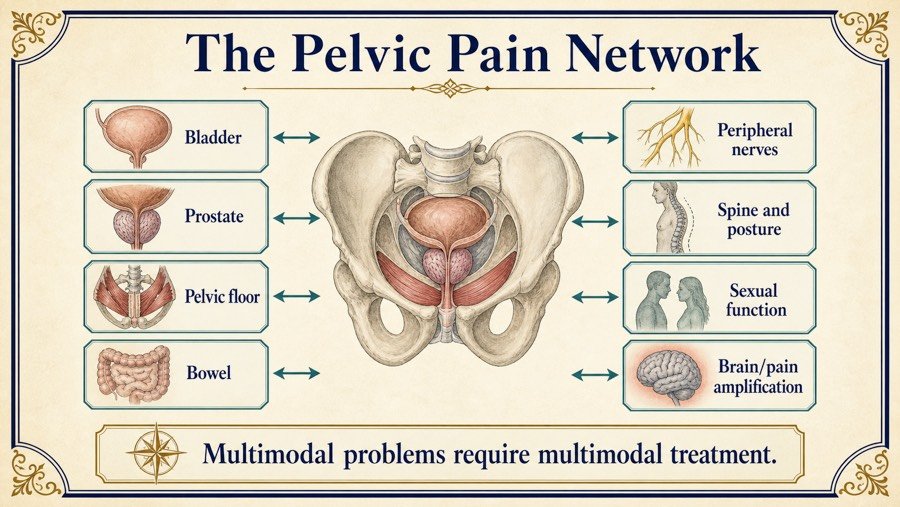
Pelvic pain is not always a persistent prostate infection
Pain in the pelvis, perineum, penis or with ejaculation may arise from overlapping bladder, prostate, muscle and nerve mechanisms. A useful diagnosis explains the pattern instead of assuming that repeated antibiotics are always the answer.
Distinguish acute infection from persistent pain
Acute bacterial prostatitis can cause substantial illness and needs a different approach from long-lasting pelvic pain without evidence of ongoing bacterial infection. The history asks about fever, urinary symptoms, cultures, sexual exposures, bowel symptoms, previous treatment and the way pain behaves over time.
A urine result, examination or scan is interpreted in context. Pelvic-floor tenderness, guarding, bowel dysfunction, bladder pain, neuropathic symptoms and referred pain may be relevant. Persistent pain does not mean that symptoms are imaginary; it means the evaluation may need to consider interacting systems rather than one infected organ.
Treat the contributors that are actually present
A plan may combine treatment of a documented infection with selected urinary-symptom care, pelvic-floor rehabilitation, bowel management, pain approaches or other directed treatment. Pelvic-floor therapy can involve relaxation and coordination; strengthening an already tense and painful muscle group may be unhelpful.
Track practical outcomes such as sitting tolerance, sleep, urination, sexual comfort and ability to exercise. Symptoms can fluctuate, so follow-up should assess the overall course and whether the working explanation still fits. If an antibiotic did not help, that result deserves review rather than an automatic indefinite repeat. Ask what findings would support a different diagnosis, whether another specialist is needed, and how the treatment plan will remain manageable. Recovery may require several targeted steps; a guarantee of a quick cure would not reflect that complexity.
Questions to bring to your visit
- Is there evidence of an active bacterial infection?
- Could the pelvic floor, bladder, bowel or nerves be contributing?
- Which functional outcomes will tell us whether the plan is working?
When to seek care: Fever, chills, marked illness, severe escalating pain or inability to urinate needs urgent assessment. Do not treat an acutely ill episode as routine chronic pelvic pain.
Explanation adapted from A Urology Consult in a Book by David Shusterman, MD, chapter 15, “Pelvic Pain, Prostatitis, And Bladder Pain.” Original illustration reproduced from the book. NIDDK: prostatitis.
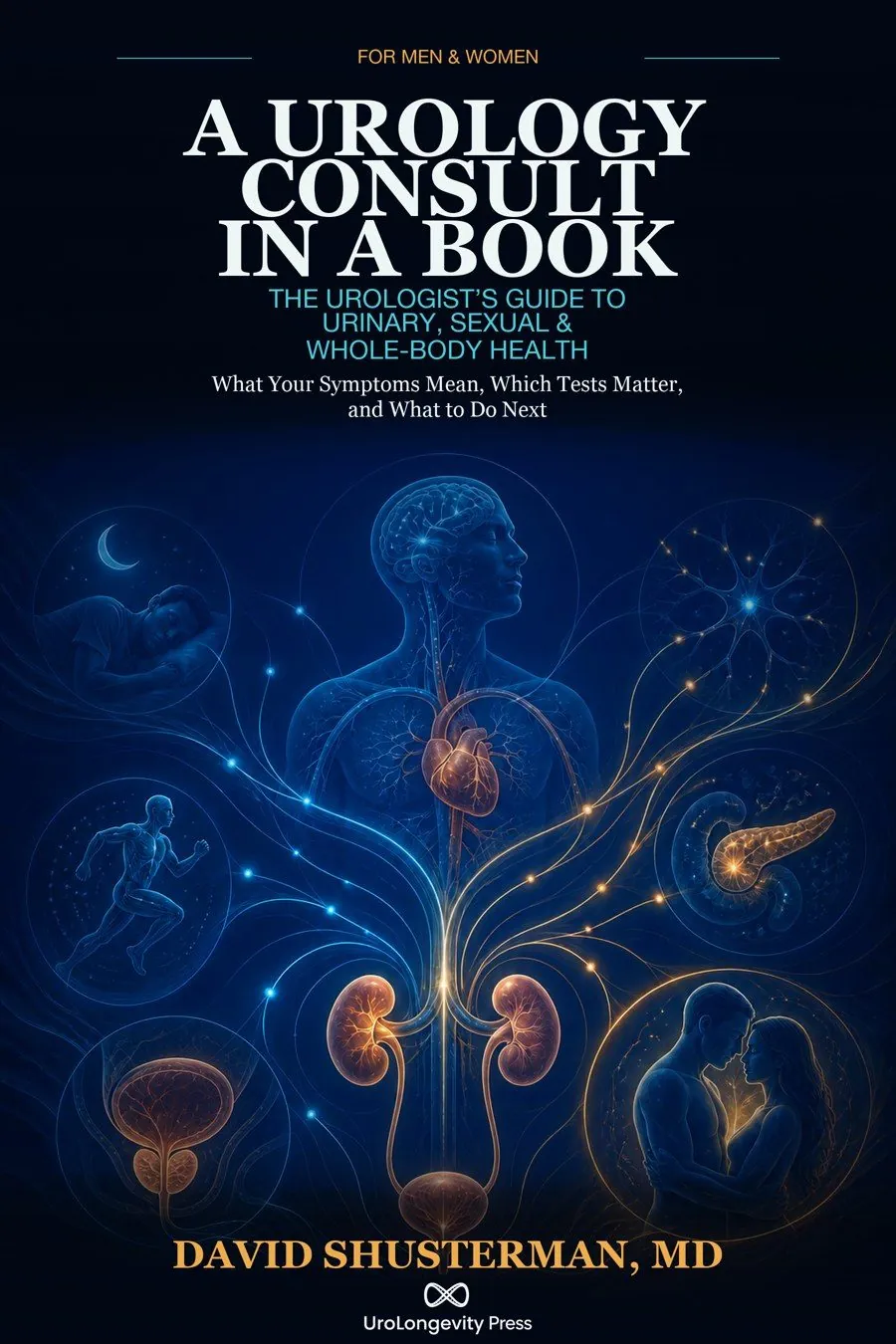
Prepare for your visit with a book by Dr. David Shusterman
A Urology Consult in a Book explains symptoms, evaluation and treatment choices. Bring your questions to your clinician; the book supports that conversation.
Explore the books and care team →Take care of the basics.
Book a men's-health visit at our Manhattan or Forest Hills office — a simple step that's easy to keep putting off.

Manhattan & Queens · All Five Boroughs