
Pelvic health explained · English edition
If pelvic or urinary symptoms have lasted for months, preparing for a first urology appointment can feel like preparing to explain your entire medical history. You do not need to arrive with a perfect diagnosis—or a binder organized like a medical chart.
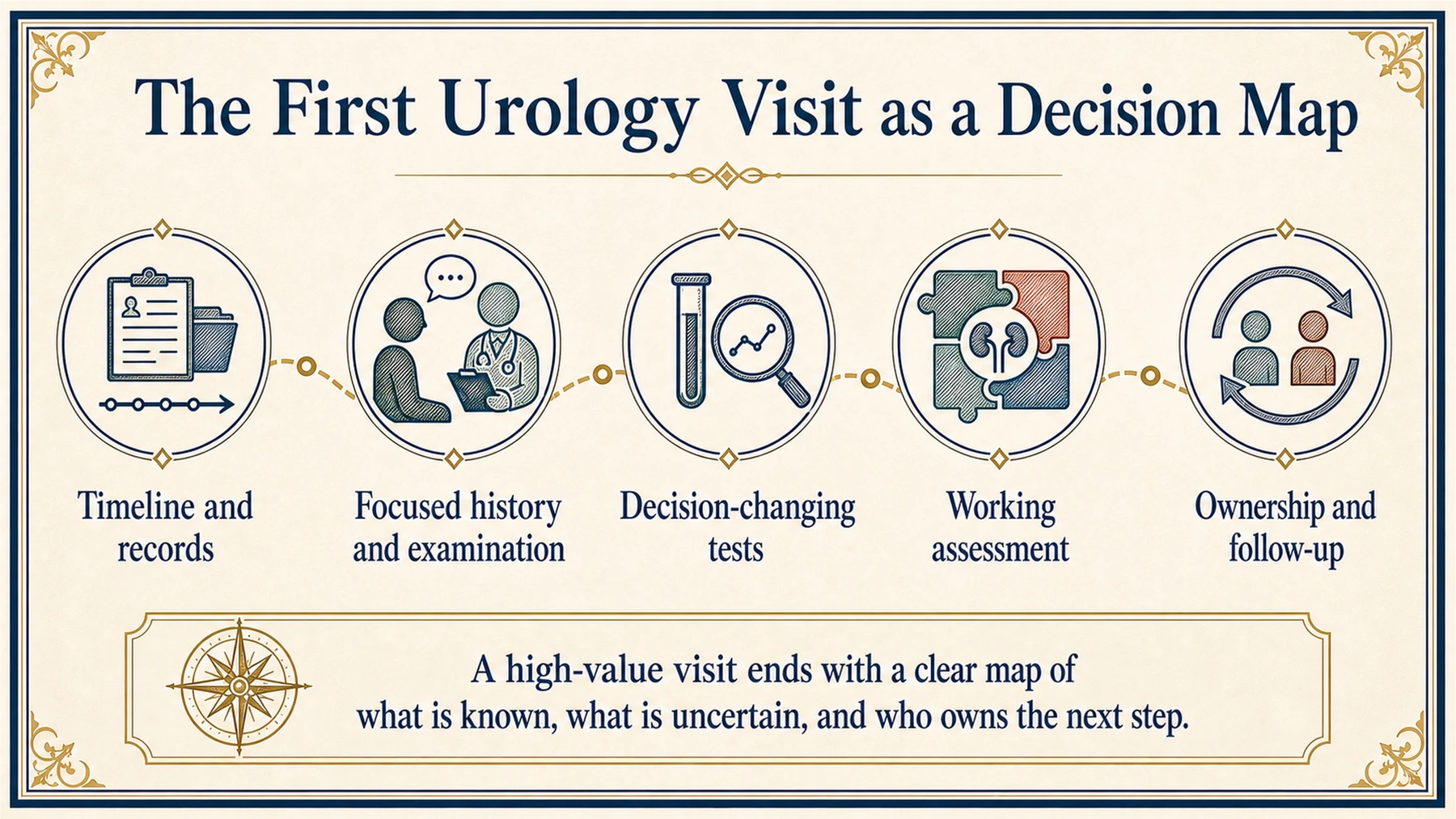
A short timeline and a clear question can make a complicated story easier to understand. The aim of the visit is to establish priorities, decide what needs assessment and agree on the next step.
Bring a one-page timeline
Write down when the current problem began, whether symptoms are constant or come in episodes and what changed over time. Approximate dates are useful when identified as approximate.
Include the main tests and treatments, especially urine culture dates and whether specimens were collected before or after antibiotics. Note what clearly helped, what caused side effects and what seemed to make no difference. Bring the original reports when you can; a later summary may omit a detail that matters.
Add a current medicine and supplement list, allergies and relevant procedures. Do not stop medicines or make major fluid changes just to prepare for a visit unless you have been instructed to do so.
Name the question that matters most
Your clinician needs to consider safety and possible diagnoses. Your own priority matters too. It might be sleeping through more of the night, being able to sit at work, understanding pain after ejaculation or knowing when a symptom requires urgent help.
Try completing this sentence: “The main thing I need to understand today is…” It can help distinguish your most pressing concern from the many details in a long history.
Understand why a test is being considered
A prostatitis evaluation is not a fixed package. History, examination and existing results help determine whether further information is needed. Depending on the question, a clinician may consider urine testing, an assessment of emptying, imaging or another investigation.
Ask what a proposed test can show and what would change if the result were normal or abnormal. Cystoscopy, for example, looks inside the urethra and bladder; it is not an automatic requirement for every person with pelvic pain.
An examination should be explained and performed with consent. If a part of the examination concerns you, say so. You can ask about its purpose, alternatives and the effect of postponing it.
Ask for the working plan in writing
A useful summary distinguishes what is known from what remains uncertain. Before leaving, ask whether you can identify:
- the working diagnosis and important alternatives;
- what the next treatment or test is intended to accomplish;
- how and when results will be reviewed;
- who is responsible for the next step;
- what symptoms require earlier contact or urgent care.
A first visit may organize the problem without answering every question. That is still valuable if the next decision is clear and the plan has a way to be reassessed.
Follow-up should evaluate benefit and burden
Agree on a symptom or practical function to review. If a treatment is not helping, its purpose and tolerability should be reconsidered. Do not assume you must continue an uncomfortable plan indefinitely because it appeared on the first visit’s instructions.
When a routine appointment is not enough
Inability to urinate, fever or shaking chills with urinary symptoms, severe worsening pain or heavy urinary bleeding needs urgent assessment. Sudden severe testicular pain requires emergency care. Tell the scheduling team about new urgent symptoms rather than waiting silently for a routine slot.
Request a visit
You can request a NY Urology appointment in Manhattan or Forest Hills and select the office that works for you. Prior records are helpful, but missing paperwork should not prevent you from asking for care.
Related reading and care
- Prostatitis evaluation and treatment
- The pelvic-pain network, illustrated
- Prostatitis and chronic pelvic-pain guide
- Prostatitis keeps coming back after antibiotics: what should be reassessed?
- Normal tests, persistent pelvic pain: what does “normal” actually rule out?
- Pelvic-floor pain: why more Kegels may be the wrong starting point
- A pelvic-pain flare plan: familiar symptoms or something new?
Sources and further reading
Adapted from Inside the Fire, by David Shusterman, MD. Practice editorial edition, October 29, 2026. These explanations support a conversation with your clinician; they do not diagnose your symptoms.