
Pelvic health explained · English edition
Burning, pelvic pressure and urinary urgency can make it feel as though the same infection keeps returning. Sometimes infection really is recurring. In other cases, the word “prostatitis” has become a label for a symptom pattern that needs a different explanation.
A useful next visit starts by asking what the earlier treatment was targeting, what evidence supported that target and what has changed. A short period of relief does not, by itself, establish why the symptoms occurred.
The story behind the prescription matters
Teaching example adapted from a fictionalized composite in Inside the Fire; it is not an actual patient account or a predicted result.
A person develops burning and pelvic pressure, receives treatment and feels better briefly. The symptoms return, now accompanied by discomfort with sitting, poor sleep and pain around intimacy. Repeating the original explanation may feel reassuring, but the changing pattern deserves attention.
The question is not whether the pain is real. The question is whether the current evidence still supports the original diagnosis.
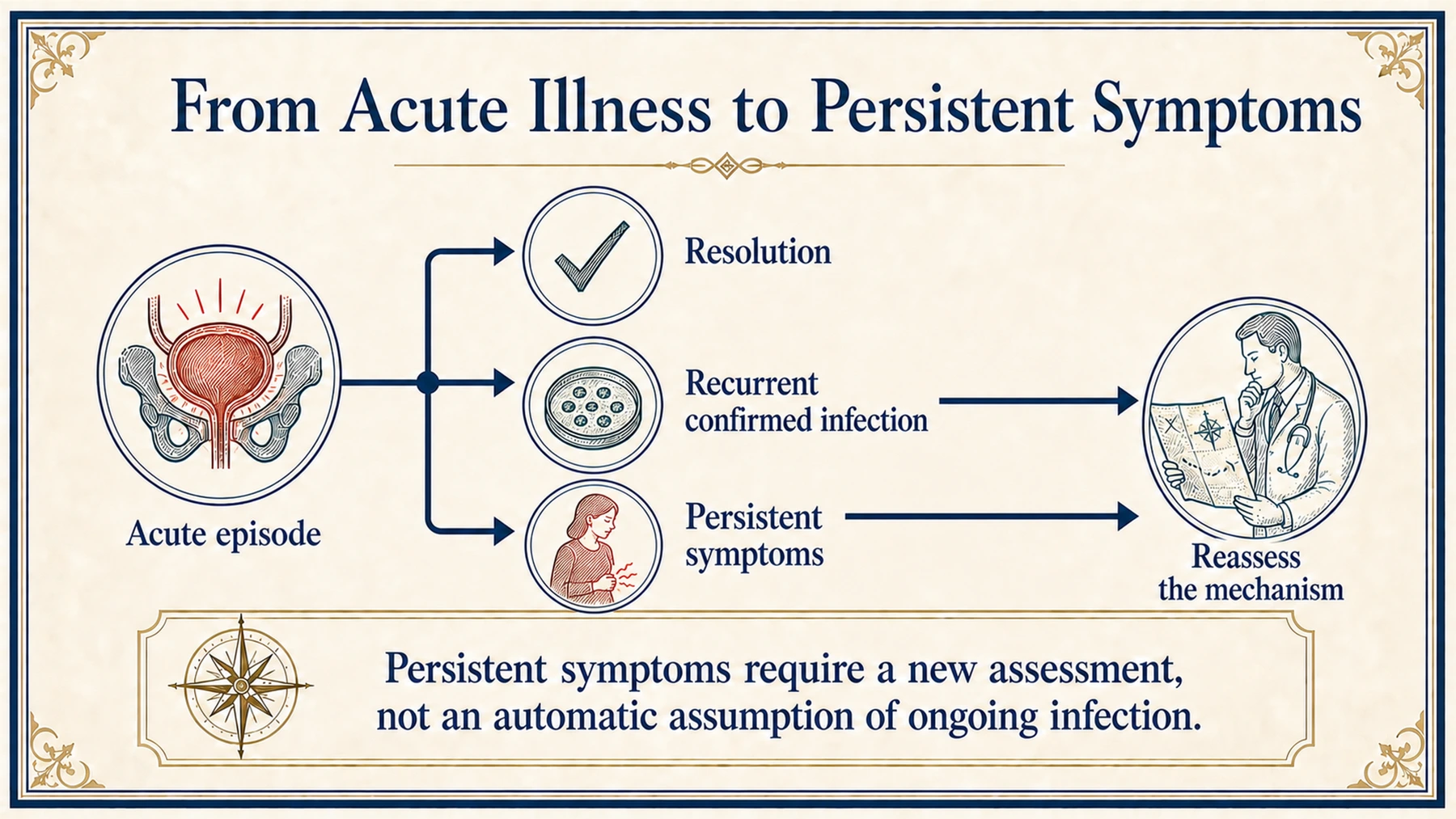
Rebuild the infection timeline
Bring the actual urine reports if possible, together with the dates of symptoms, specimen collection and antibiotic use. A result obtained after treatment has started may answer a different question from a specimen collected beforehand. Tell the clinician about any sexually transmitted infection testing, prior resistant organisms and treatment side effects.
A clinician may distinguish documented recurrent urinary infection, chronic bacterial prostatitis and chronic prostatitis/chronic pelvic pain syndrome, often shortened to CP/CPPS. These categories can produce overlapping complaints, but they do not justify an identical treatment plan.
Do not stop a prescribed antibiotic or postpone urgent treatment to obtain a sample without medical advice. The purpose of reviewing the timeline is to improve the next decision, not to recreate the previous episode at home.
Ask what else could be contributing
A focused evaluation may consider bladder storage or emptying symptoms, pelvic-floor muscle tenderness, bowel problems, stones or another explanation suggested by the history. Tests should be chosen for a question: what would this result change?
The same principle applies to treatment. An intervention for urgency, pain or muscle tension can have a clear job even while the overall diagnosis is being refined. Improvement in one symptom does not prove that a single mechanism explains everything.
Repeated antibiotics without a supported infectious target should prompt a conversation about benefit, harms and alternatives. That is different from dismissing infection whenever one result is negative.
Leave with a next step you can explain
Ask your clinician to write down the working diagnosis, what remains uncertain, the symptom being treated and when the plan will be reviewed. Choose one practical goal, such as sleeping more comfortably or sitting through a work meeting, alongside any symptom score.
Useful questions include: “Which past episodes were confirmed infections?” “What would make you repeat testing?” and “Who should I contact if this treatment is not helping?”
When to seek urgent assessment
Get urgent medical help for inability to urinate, fever or shaking chills with urinary symptoms, severe or rapidly worsening pain, or feeling seriously unwell. Sudden severe testicular pain needs emergency assessment. Visible blood in the urine also needs medical review; heavy bleeding, clots or difficulty urinating require urgent care.
Arrange an evaluation
NY Urology sees patients at its Manhattan and Forest Hills offices. When requesting an appointment, mention persistent symptoms and bring prior test results. The visit is an opportunity to review the evidence and decide what should happen next.
Related reading and care
- Prostatitis evaluation and treatment
- The pelvic-pain network, illustrated
- Prostatitis and chronic pelvic-pain guide
- Normal tests, persistent pelvic pain: what does “normal” actually rule out?
- Pelvic-floor pain: why more Kegels may be the wrong starting point
- Your first prostatitis visit: bring a timeline, leave with a plan
- A pelvic-pain flare plan: familiar symptoms or something new?
Sources and further reading
Adapted from Inside the Fire, by David Shusterman, MD. Practice editorial edition, October 29, 2026. These explanations support a conversation with your clinician; they do not diagnose your symptoms.