
Patient education · English edition · October 29, 2026
Prostatitis and pelvic pain
Know when infection is the problem, and when it is not.
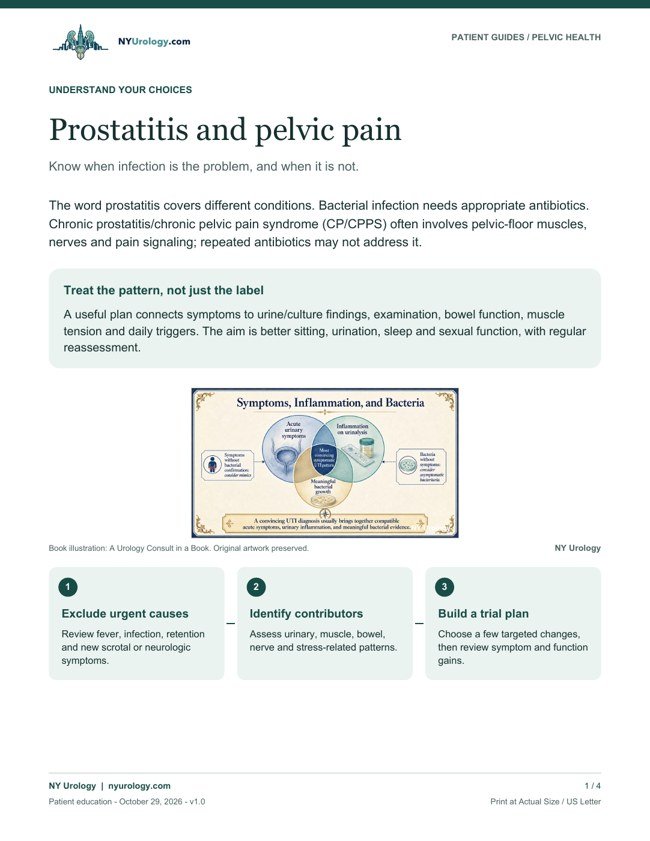
The word prostatitis covers different conditions. Bacterial infection needs appropriate antibiotics. Chronic prostatitis/chronic pelvic pain syndrome (CP/CPPS) often involves pelvic-floor muscles, nerves and pain signaling; repeated antibiotics may not address it.
Treat the pattern, not just the label
A useful plan connects symptoms to urine/culture findings, examination, bowel function, muscle tension and daily triggers. The aim is better sitting, urination, sleep and sexual function, with regular reassessment.
Compare the options
| Option | Why consider it | What to weigh |
|---|---|---|
| Possible bacterial infection | Urine testing and clinical assessment guide antibiotics and further care. | Fever, chills and difficulty urinating can indicate acute bacterial prostatitis. Do not delay urgent assessment. |
| Muscle-related pelvic pain | Pelvic-floor physical therapy may help coordination and relaxation. | Avoid automatic strengthening exercises if muscles are already tight or painful. |
| Urinary and pain symptoms | Selected alpha blockers, pain treatments or nerve-directed medicines may help according to the symptom pattern. | Review side effects and interactions. A chronic-pain plan may combine approaches rather than rely on one drug. |
| Food and drink | Trial reductions in caffeine, alcohol, acidic or spicy foods if they consistently worsen symptoms. | There is no universal prostatitis diet. Keep a diary and restore foods that do not affect you. |
| Activity and intimacy | Walking, gentle movement, sitting breaks, reduced cycling pressure and comfortable sexual activity may help. | Avoid prolonged bed rest or blanket sexual restrictions. Modify what provokes pain, and discuss persistent ejaculation pain. |
Our office approach
How our practice provides care, alongside the general options above.
The least invasive effective path
We prioritize effective care with less procedural burden when it fits your diagnosis, anatomy and goals. Our interventional service invests in advanced imaging for targeted procedures; equipment and manufacturers change over time. Imaging, contrast, radiation and anesthesia are discussed for your particular treatment.
Focused ultrasound expertise
Our practice provides modern in-office ultrasound for urology, gynecology and interventional care. Experienced, dedicated ultrasound technologists focus on these specialties, with much of their work in urology. An in-house radiologist interprets images, and treating physicians trained in image interpretation also review relevant studies. Ultrasound uses no ionizing radiation; CT, MRI or other tests may still be needed.
Prompt answers and a clear follow-up plan
We usually generate ultrasound reports and explain the findings and follow-up to patients the same day. Some studies need additional review, and turnaround varies. Ask what the result means and what happens next. Confirm your service and location before visiting.
More of your evaluation in one place
In-office blood collection and urine testing can reduce separate testing visits; preparation and result timing depend on the test. Bladder ultrasound can measure urine remaining after urination. For suitable men, we favor noninvasive UroCuff pressure-flow assessment when it can answer the question, rather than routine catheter-based urodynamics. These tests are not interchangeable; complex cases may need additional studies.
Questions to ask
- Do we have evidence of bacterial infection?
- Could pelvic-floor tension or another cause explain my symptoms?
- Which activities should I modify, and which can I continue?
- What would make us stop or change a treatment that is not helping?
What you can do now
- Bring a record of prior antibiotics, cultures, medicines and what actually improved symptoms.
- Use heat, stretching or relaxation only as tolerated; manage constipation and break up sitting.
- Do not repeatedly self-start leftover antibiotics or escalate supplements. Persistent pain deserves a coordinated plan.
When to seek urgent care
Fever/chills with urinary symptoms, inability to urinate, severe testicular pain, or new weakness or loss of bowel/bladder control requires urgent assessment.
Further reading and sources
Further reading: A Urology Consult in a Book, by David Shusterman, MD.