
Pelvic health explained · English edition
When pelvic pain flares, deciding what to do can become almost as stressful as the symptoms themselves. Is this the familiar pattern? Should you use an existing treatment? Is it time to call—or to seek urgent care?
A written plan made with your clinician can separate those decisions before the next difficult day. It should fit your diagnosis, health conditions and medicines. It should also make clear that a genuinely new episode deserves a fresh look.
Plan for three different situations
Inside the Fire uses a fictionalized composite to show how an established pelvic-pain pattern can be managed with separate plans for everyday care, familiar flares and urgent changes. The example is educational, not a real patient outcome.
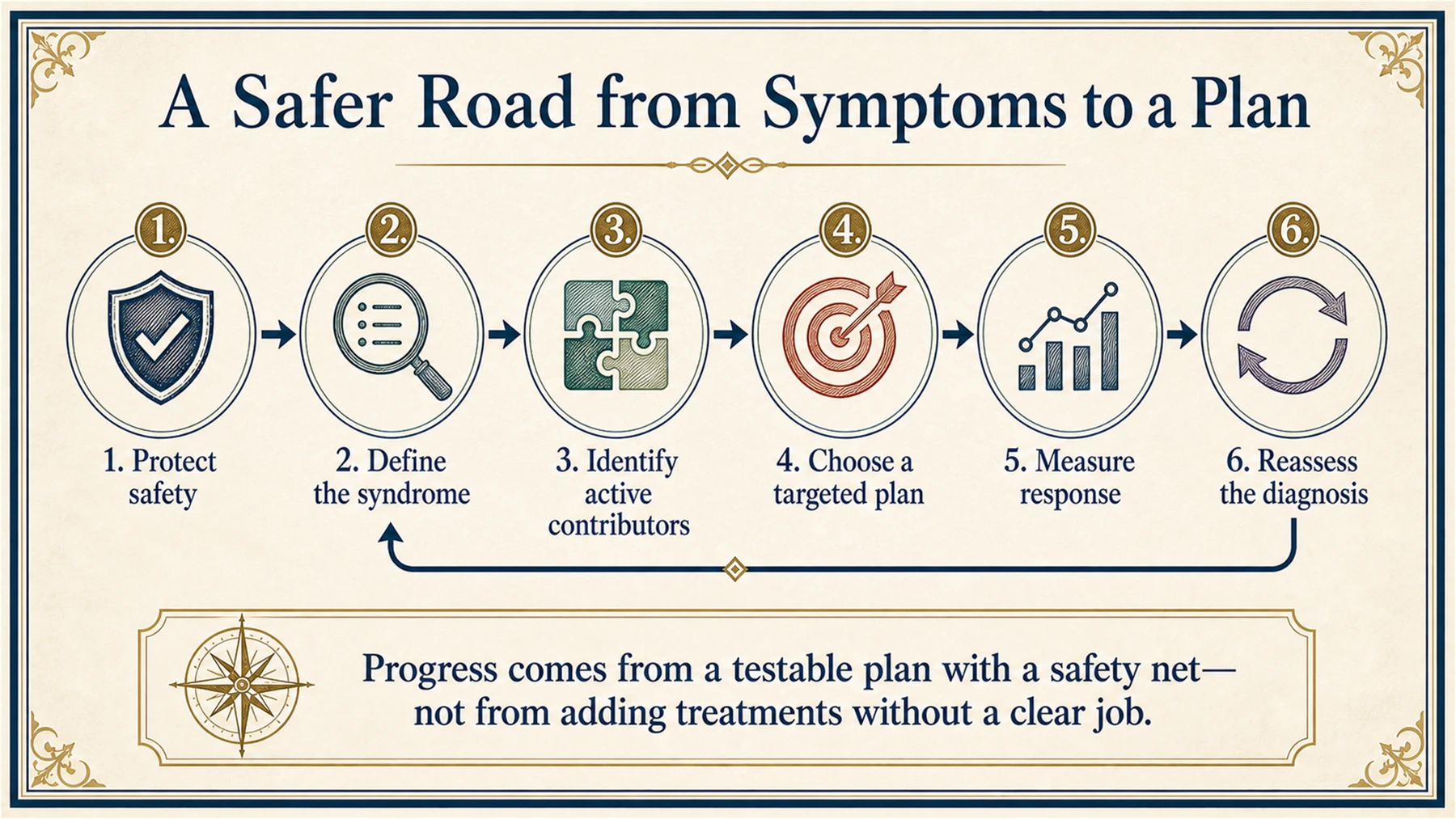
The value of this framework is clarity. It does not promise that symptoms will disappear or that you can diagnose every episode yourself.
Everyday care: keep the useful parts visible
List the treatments and routines you and your clinician have agreed to continue. Record what each is intended to help, any important precautions and the next review date.
Choose a practical goal, such as better sleep, more comfortable sitting or less disruptive urgency. You do not need to track every sensation. A small amount of consistent information is often easier to discuss than an exhaustive record assembled only during the worst flare.
Ask what would lead to reducing, stopping or changing an intervention. A treatment should not remain in the plan merely because it was once suggested.
Familiar flare: follow the agreed instructions
Describe the usual pattern in plain language: where symptoms occur, which changes are familiar and what has previously been assessed. Then write the specific actions your clinician has approved for that situation, including any medicine instructions and when to make contact.
Do not substitute leftover antibiotics, borrowed prescriptions or unreviewed supplements. Avoid dramatic fluid restriction or excessive fluid intake as a way to force symptoms to change. Any hydration advice should account for your medical circumstances.
If an agreed comfort measure worsens symptoms, stop and seek guidance rather than assuming discomfort proves it is working. A familiar pattern can still need reassessment if it becomes more severe, lasts longer than expected or stops responding as it usually does.
New or urgent symptoms: use a different route
Do not label fever or shaking chills with urinary symptoms, inability to urinate, heavy urinary bleeding, clots or rapidly worsening severe pain as “just another flare.” These changes need urgent medical assessment. Sudden severe testicular pain requires emergency care.
A prior chronic-pain diagnosis or reassuring investigation does not make new danger signs harmless. If you feel seriously unwell or cannot obtain timely guidance, seek urgent care rather than waiting for an online appointment response.
Put the contact details beside the plan
Write down the routine contact, how to seek advice outside office hours and when emergency services are appropriate. Clarify who will review new results and whether another clinician needs to be informed about treatment changes.
At follow-up, bring what happened: the symptoms, what you did, whether it helped and whether anything was different. The plan should be allowed to change when the evidence changes.
Build the plan at a visit
You can ask NY Urology about a written flare plan during an appointment in Manhattan or Forest Hills. The most useful version is specific enough to guide the next decision while leaving room for a new assessment when the situation no longer fits.
Related reading and care
- Prostatitis evaluation and treatment
- The pelvic-pain network, illustrated
- Prostatitis and chronic pelvic-pain guide
- Prostatitis keeps coming back after antibiotics: what should be reassessed?
- Normal tests, persistent pelvic pain: what does “normal” actually rule out?
- Pelvic-floor pain: why more Kegels may be the wrong starting point
- Your first prostatitis visit: bring a timeline, leave with a plan
Sources and further reading
Adapted from Inside the Fire, by David Shusterman, MD. Practice editorial edition, October 29, 2026. These explanations support a conversation with your clinician; they do not diagnose your symptoms.