
Home · Conditions · Weight Management
Weight management
Medical Weight Management
Explore the illustrated guide ↓
Weight has a direct effect on urologic and sexual health. We offer in-house weight-loss consultation because, for many men, losing weight is one of the most powerful things they can do to improve how they feel and function.
Why a urology practice cares about weight
Weight isn't a side issue in urology — it's often central. Excess weight is tied to erectile dysfunction, low testosterone, urinary incontinence and overactive bladder, kidney stones, and overall metabolic health. For many patients, weight loss meaningfully improves these conditions — sometimes more than any single procedure or pill.
Handled in-house, not handed off
A real consultation
If you're carrying extra weight, we offer a weight-loss consultation right here, integrated with your urologic care rather than sent somewhere else and forgotten. We make it part of the plan because it changes outcomes.
Tied to your urologic goals
We connect weight management to what brought you in — better erections, better energy and testosterone, fewer bladder symptoms, lower stone risk — so the effort has a clear, motivating payoff you can feel.
Why it matters
Done in the office, not the hospital
Because we have a combined urology and interventional radiology team in-office, we diagnose and treat the large majority of what we do right here — see how our in-office model works.
When to ask about it
If weight is affecting your health — or your urologic symptoms — ask us about it at your visit. Call (212) 991-9991 or book a consultation.
Common questions
Why does a urologist offer weight management?
Because weight directly affects urologic and sexual health — erectile function, testosterone, bladder symptoms, kidney stones, and metabolic health. For many men, weight loss meaningfully improves these conditions, so we make it part of the plan.
How can weight loss help my urologic symptoms?
Losing weight can improve erectile function, raise testosterone, reduce urinary incontinence and overactive-bladder symptoms, and lower kidney-stone and metabolic risk. The benefits often show up across several conditions at once.
Is the weight-loss program done in your office?
Yes — we offer weight-loss consultation in-house, integrated with your urologic care rather than handed off elsewhere, so it actually gets followed through.
Will losing weight help my erectile dysfunction or testosterone?
For many men, yes. Excess weight is strongly linked to both ED and low testosterone, and weight loss can improve both — often alongside the other treatments we offer.
Do I have to be very overweight to benefit?
No. Even moderate weight loss can improve urologic and sexual-health symptoms and overall metabolic health. We'll tailor guidance to your situation.
UNDERSTAND YOUR CARE
Protect muscle and function while addressing metabolic risk
Weight management in a urologic context considers more than a number on the scale. Metabolic health, muscle reserve, sleep, movement, urinary symptoms and sexual function can influence one another.
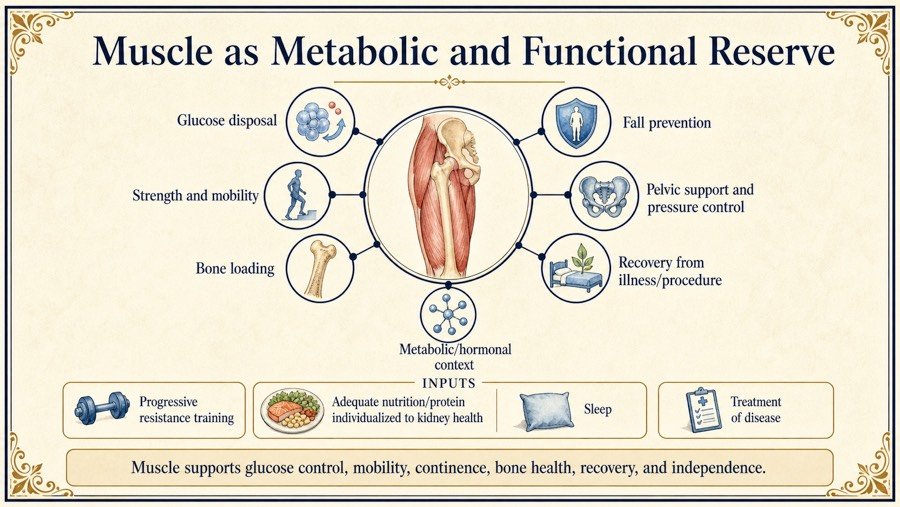
Start with health and function rather than a promise
The assessment considers medical history, medicines, eating patterns, activity, sleep and goals. Symptoms such as fatigue or reduced sexual function may have more than one cause. Weight change should not replace evaluation of urinary bleeding, obstruction, infection or another specific urologic problem.
The book’s muscle-reserve illustration explains why maintaining physical function matters during health changes. Muscle supports mobility and metabolic function; a plan should consider appropriate movement and nutrition alongside weight goals. Exercise and food advice must be adapted to health limitations and any kidney or other medical condition.
Choose an individualized plan and a review process
Behavioral support, treatment of contributing conditions and selected medical or procedural options have different roles. Medication eligibility, precautions, expected benefit and monitoring depend on the person and the treatment. A specific drug should not be presented as suitable for everyone or as a guaranteed way to reverse urologic disease.
Track outcomes that matter beyond weight: strength, stamina, sleep, daily function and relevant laboratory or symptom measures. Changes in muscle, nutrition or treatment tolerability may require an adjustment even when the scale is moving in the intended direction. If several clinicians are involved, coordinate the plan and medication list so that blood pressure, glucose, kidney function and other conditions remain appropriately monitored. Sustainable improvement requires a follow-up process and a plan for setbacks, not simply an ambitious short-term target.
Questions to bring to your visit
- Which health risks and functional goals should our plan target?
- How will we protect muscle and adapt activity to my health?
- What benefits, adverse effects and safety measures will we review?
When to seek care: Severe illness, dehydration, persistent vomiting or new acute urinary symptoms needs clinical assessment. Do not alter prescription medicines or fluid restrictions without the treating clinician’s guidance.
Explanation adapted from A Urology Consult in a Book by David Shusterman, MD, chapter 38, “Muscle, Metabolism, And Hormonal Reserve.” Original illustration reproduced from the book. NIDDK: urologic health topics.
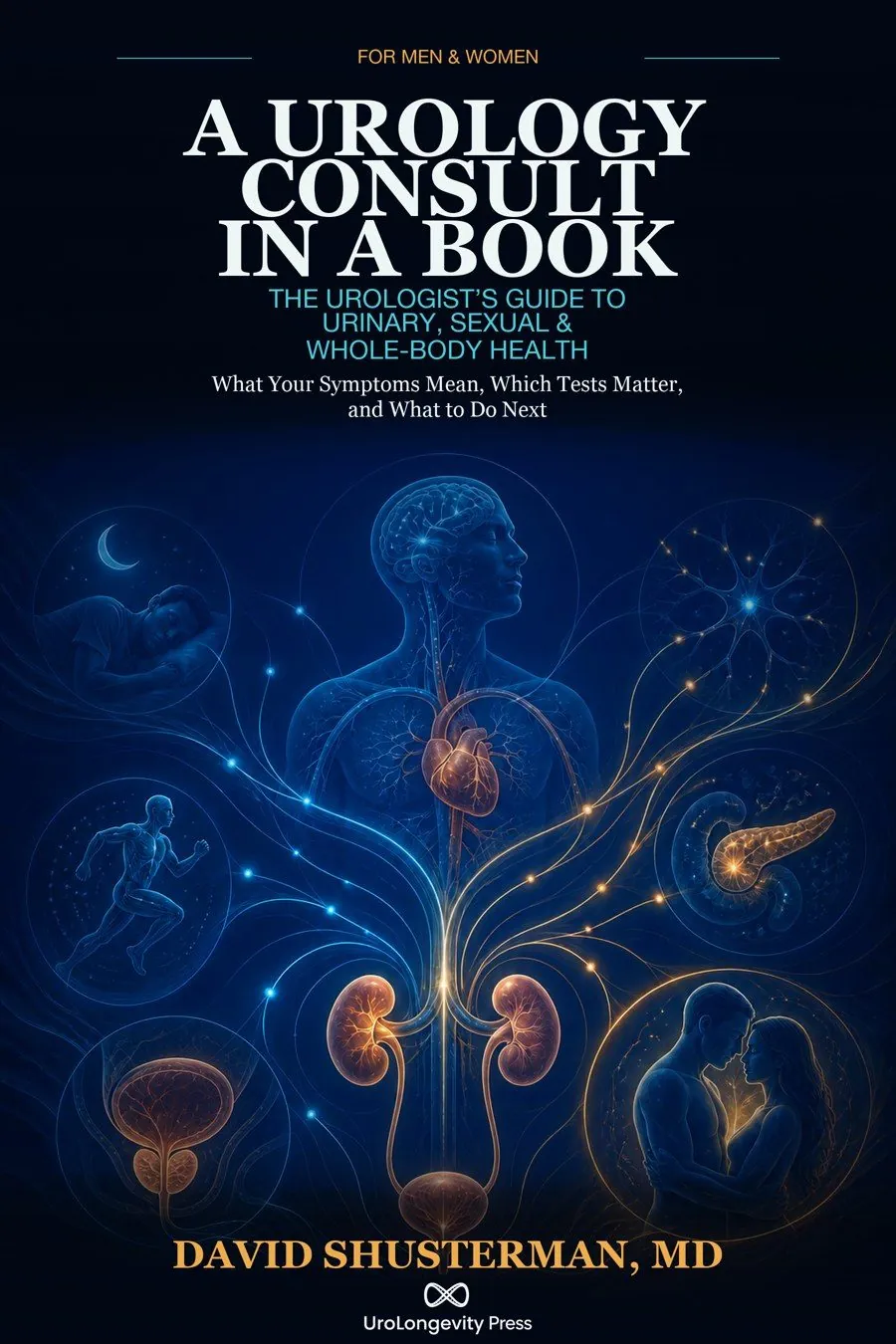
Prepare for your visit with a book by Dr. David Shusterman
A Urology Consult in a Book explains symptoms, evaluation and treatment choices. Bring your questions to your clinician; the book supports that conversation.
Explore the books and care team →Take care of the basics.
Book a men's-health visit at our Manhattan or Forest Hills office — a simple step that's easy to keep putting off.

Manhattan & Queens · All Five Boroughs